The Land of the Giants: A Week at Plummer's Arctic Circle Outpost
June 26 – July 4, 2026
Where Time Runs as Swift as the Tree River, and the Company You Keep is Everything
The Pilgrimage Begins:
There are fishing trips, and then there are pilgrimages. The kind of journeys that reset your internal compass, strip away the noise of the concrete jungle, and remind you why you fell in love with a rod in your hand in the first place. But here's the truth nobody tells you in the brochures: it's not the destination that makes the trip. It's who you're standing next to when you get there.
For the past several years, I've been blessed to make that pilgrimage north — way north — to a place where the midnight sun doesn't set, the mosquitoes carry FAA registration numbers, and the fish you're chasing might have been swimming these waters when your grandfather was in diapers.
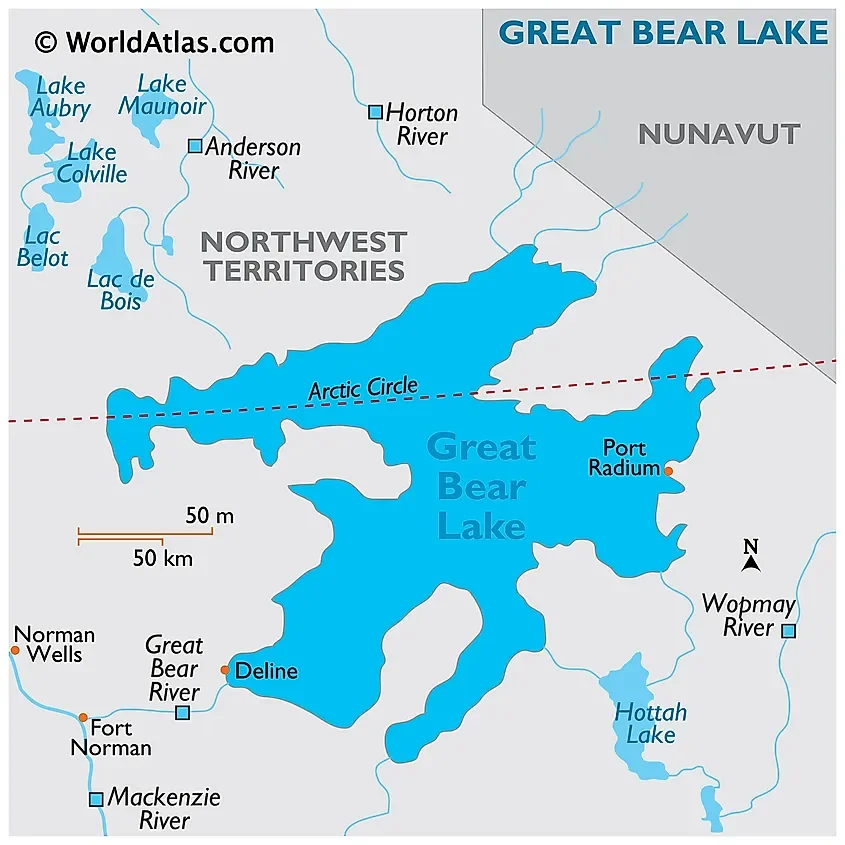
I'm talking about Plummer's Arctic Circle Outpost on Great Bear Lake — the eighth largest lake in the world by surface area, the fourth largest in North America, and the largest lake entirely within Canada. To put that in perspective, this inland sea covers roughly 12,000 square miles — about the size of England — and plunges to depths of over 1,400 feet. It's a place so remote that fewer than 400 anglers fish its waters in an entire season. That's not a typo. Four hundred. In a lake the size of a small country.
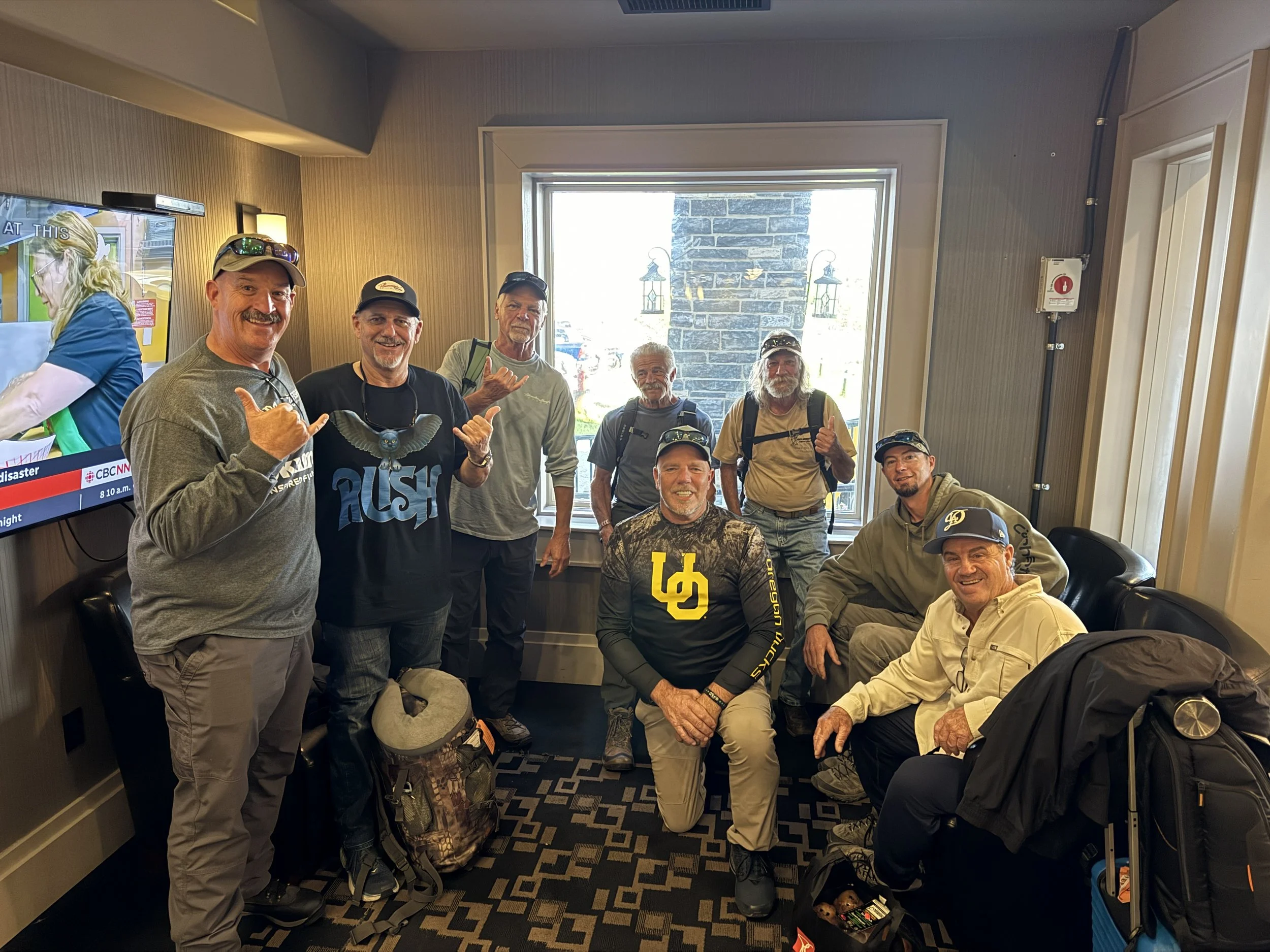
This year, our annual expedition took on new blood. The OGs — Harold Ball and Kenny Gold, longtime Plummer's patrons who've forgotten more about Great Bear than most of us will ever learn — invited us back for the first week of the season. They even let me sit at the head of the table, just as they had the year before. But this time, we brought reinforcements: Tim and Terry Tuttle, the brothers from HellerHighWater; Rob Tomlin, experiencing the Arctic for the very first time; the teams of Jimmy; Rich; and Sean and Scotty — Terry's son-in-law and his buddy, two guys who brought a whole new energy to the Arctic.
A crew of hardened anglers, dreamers, and storytellers, all converging on one of the last truly wild places on Earth.
But before we even talk about the fish, we need to talk about the people. Because that's what this story is really about.
The Muppet Men and the Heart of Gold:

If you've never had the pleasure of sharing a dinner table with Harold and Kenny, let me paint the picture for you. Imagine the two old guys from the Muppets — Statler and Waldorf — sitting in the balcony, bickering and roasting each other with the precision of seasoned comedians, except these two aren't heckling a show. They are the show.

They'll argue about everything: who caught the bigger fish, who forgot the tackle box, whose turn it is to buy the next round. But underneath every jab is a bond forged over decades of shared Arctic sunrises and frozen fingers. And then, just when you think they're about to come to blows, Kenny leans back, looks at you with that mischievous grin, and says, "Hey, I got a true story..."
And drops one of the funniest damn jokes you've heard in years.
The table erupts. Beer sprays. Someone chokes on their sausage. And you realize that these two aren't just fishing buddies — they're family. The kind of family you choose, the kind that makes a remote outpost in the Northwest Territories feel like home.
The Tuttle Brothers: Giants with Hearts to Match:
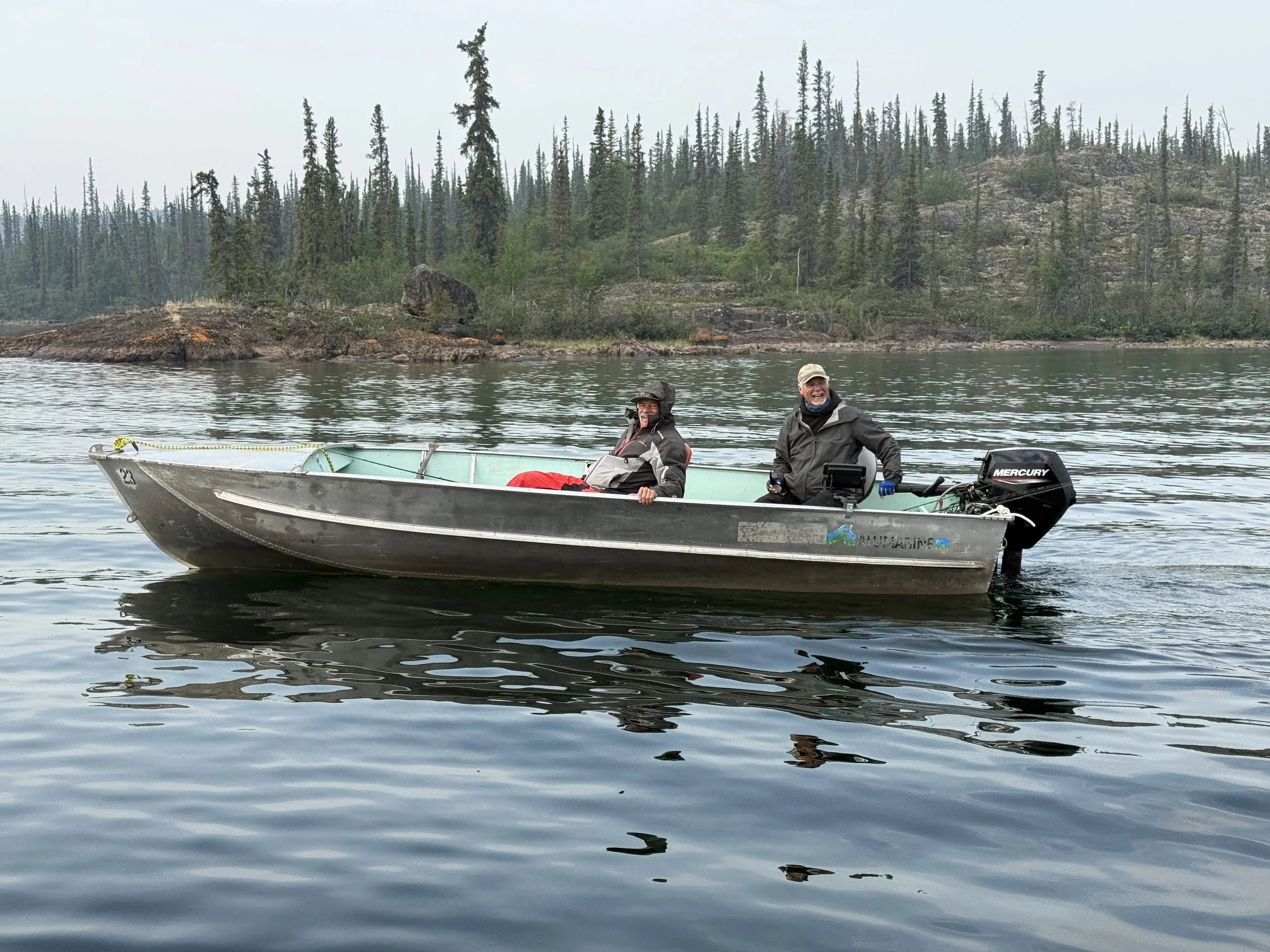
Then there are the Tuttle brothers, Tim and Terry. If you've ever met them, you know. These guys have kindness as big as their hearts, and hearts the size of Great Bear itself. They're the kind of men who don't just want to make you smile — they need to. They have your back before you even know you need it. They lift the room just by walking into it.
Tim's been through hell and back with his music, his life, his battles. Terry's been right there beside him. And when they show up at the Arctic Circle, they bring that same warrior spirit — not to conquer the lake, but to share it. To make sure every person in the group feels like they're part of something bigger. They're an inspiration, plain and simple. The kind of guys that make you want to be better. Not just as an angler. As a human being.
Sean: The Towering String Bean with the Heart of a Giant:
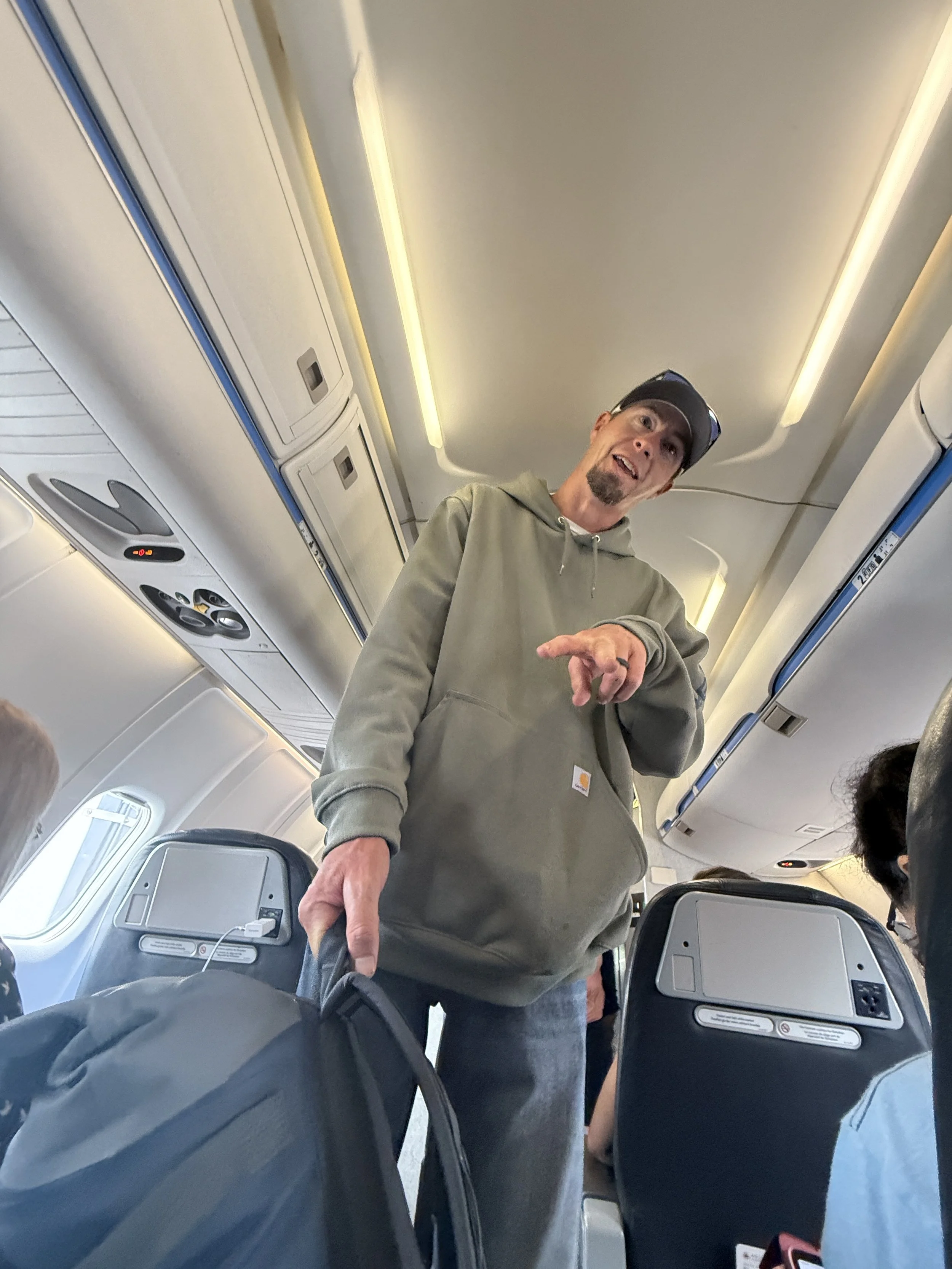
Now, if we're talking about characters who make a trip unforgettable, we have to talk about Sean.
Sean is Terry's son-in-law, and let me tell you something — this dude is the tallest human being I've ever shared a boat with. I'm talking 6'7" easy, a string bean of a man who looks like someone stretched a fishing rod into human form. Watching him walk through the plane is a comedy show all by itself. He has to bend over three feet just to keep from rubbing his head on the ceiling, folding himself like a human pretzel through every doorway, every aisle, every low-hanging beam at the lodge.
I'm 6'2" — not exactly short — and I spent the entire week looking up at this guy. "Damn, Sean," I'd say, "you are one tall dude."
But here's the thing about Sean — his height is the least impressive thing about him. It's his attitude. The guy has a spirit so positive, so genuinely good, that he makes you want to check your own energy. He and Scotty were the perfect pairing — two fishing guns with enough enthusiasm to power the entire outpost. They fished hard, laughed harder, and brought a youthful fire that reminded us old dogs why we fell in love with this sport in the first place.
Now, I'll be honest — I don't think the Arctic is going to let them off easy. Twenty-hour fishing days for seven straight? That takes a toll. It beats you down, chews you up, and spits you out on the tarmac in Yellowknife wondering where your life force went. But Sean? Sean eats like a machine! If it hits 12 sharp and he does not have his lunch, you better watch out — he may turn into an anaconda, take his 7-foot snaky body, and wrap you up for a snack. Why? Because a guy needs to eat at 12, period!
Scotty: The Smile That Lit Up the Arctic:
This year, Sean brought a new member: Scotty. And I need you to understand something about Scotty.
This man loves the outdoors. Hunting, fishing, doesn't matter — if it's wild, he's in. And his smile? That smile could light up a room in a blackout. From the moment we landed at the outpost to the day we packed up to head home, that smile never faded. Not once.
Let me say that again: twenty hours of fishing, seven days straight, and that smile never dimmed.
Scotty and Sean fished until they dropped. I'm talking about running on pure fumes, eyes glazed, hands cramping, and still casting. Still smiling. Still living. It wasn't until we got back to Yellowknife, after the final flight, after the last mosquito had been swatted, that I finally saw it — that slow fade. The life energy, slowly drained from a man who had given everything he had to the lake.
And when you hear Scotty's story — the challenges he's faced, the battles he's fought, the perspective he's earned — you can't help but appreciate every single moment God gives you on this earth. Because if a man can smile like that after everything he's been through, after a week of war with the Arctic, what excuse do the rest of us have?
The Misfit Toys: Jimmy and Rick:
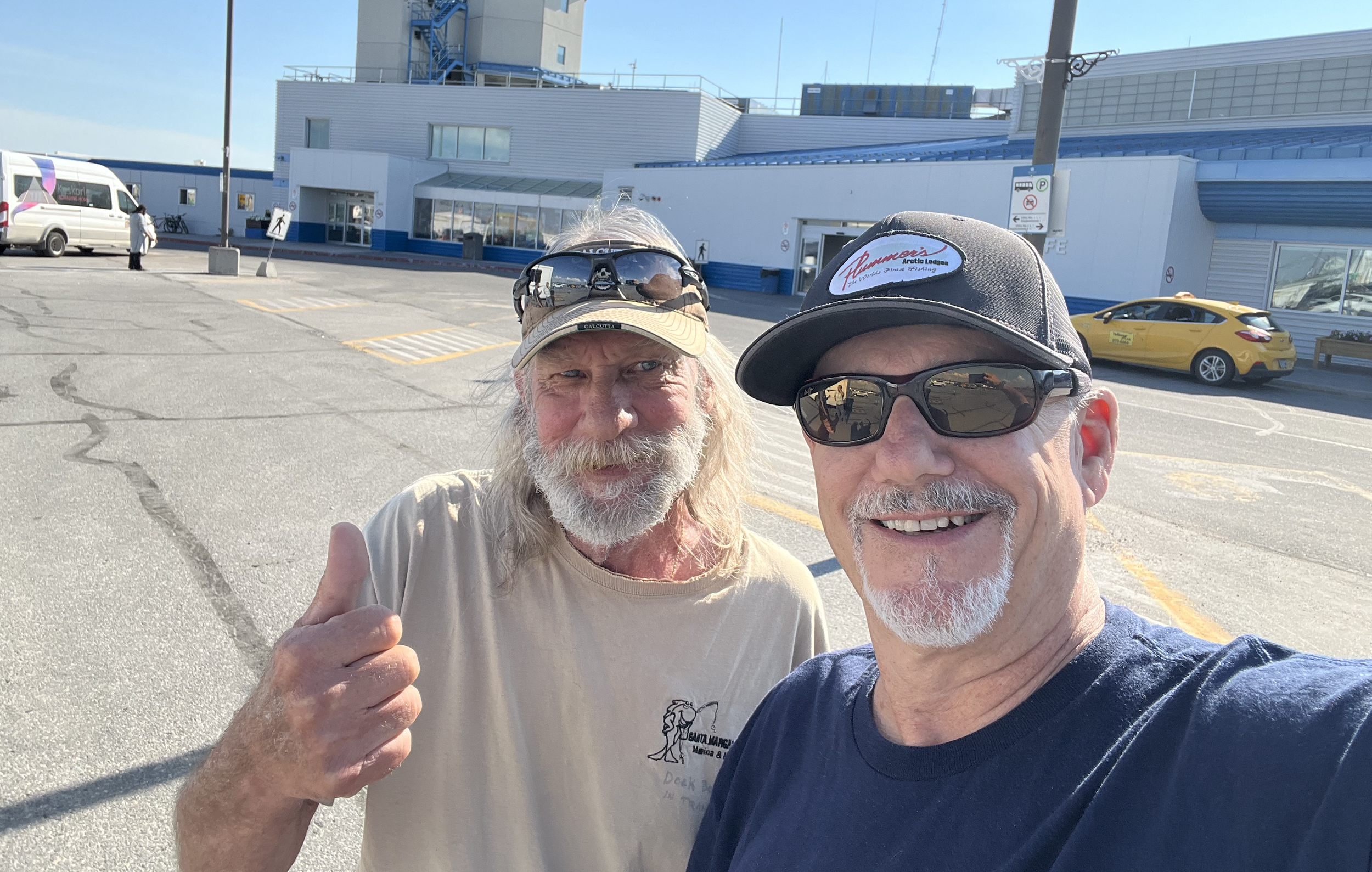
Then you get over to Jimmy and Rick, and you just gotta giggle.
One look at Rick and you swear Willie Nelson escaped the tour bus, grabbed a rod, a bag of weed, and decided to go fishing with Jim. The hair, the vibe, the whole package — it's like someone cloned Willie, dropped him in the Northwest Territories, and said, "Go get 'em, cowboy."
They're our misfit toys. The troopers who don't fit any mold but their own. And they went out there and had the time of their lives, proving once again that the best fishing trips aren't about matching gear or perfect technique. They're about showing up exactly as you are and finding your people.
Rob: The Convert:
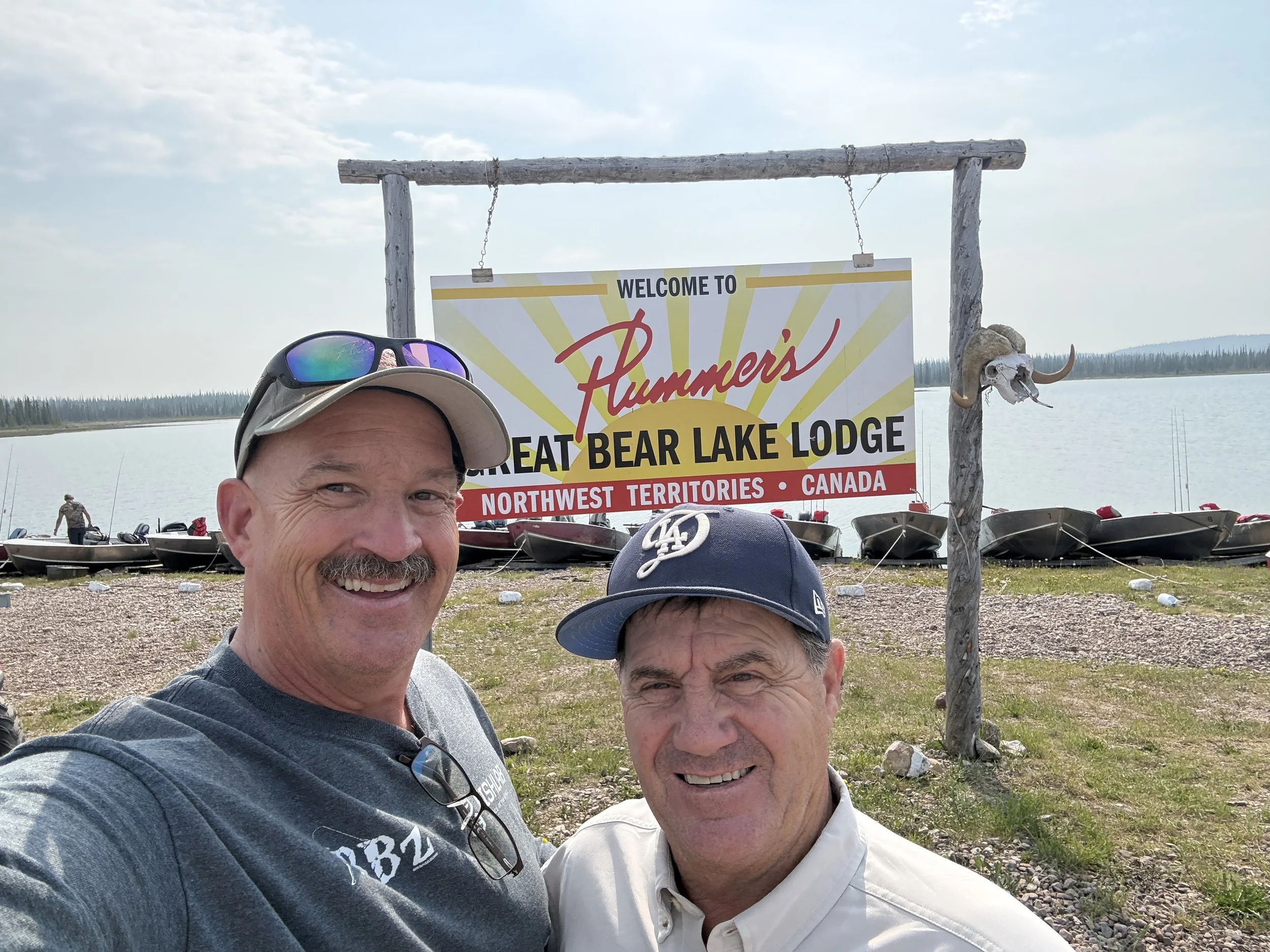
And then there was Rob.
Rob and I go way back. We've fished against each other for years on local waters, traded blows in tournaments, chased sharks in the ocean together. But Rob had never sat in a boat with me for 12 hours a day. He'd never seen the full BBZ theory in action — the overthinking, the dissecting, the top-middle-bottom analysis, the constant mental gymnastics of trying to outsmart a fish that might be older than both of us combined.
I watched him that first day. Watched him watch me. And I didn't need words. I could see it in his face — that dog head tilt, ears up, eyes wide, like I'd just farted in church and he couldn't believe what he was witnessing.
"You are batshit crazy," his face said. And he wasn't wrong.
But here's the thing about the Arctic. She has a way of humbling you. Of teaching you. And on the last day, I found a spot. I looked at Rob and said, "This is it."
He looked around. "What about over there? What about over there?"
I shook my head. "What about we sit here for 10 hours and I show you what this place can bring?"
So we sat. And in ten hours of fishing, I don't think we went more than twenty minutes without hooking a fish. Every single one of them: 15 to 25 pounds. Lake trout after lake trout, hammering our jigs, T-60 Flatfish, testing our drags, making us laugh like kids on Christmas morning.
And I watched it happen. I watched that spark in Rob's eyes — that little flicker of doubt and curiosity — turn into a full-blown fire. By the time we got the boat to the dock, he wasn't asking if we were coming back. He was asking when. "When are we going next year? I have to come back."
That's the Plummer's effect. That's what happens when you go to a place that's only open a few weeks out of the year, where every cast holds the promise of a true fish of a lifetime, and where the experience wraps around you so tight that you can't imagine life without it.
The Journey North: From Concrete to Tundra:

The adventure kicked off early Friday morning, June 26th. Our team gathered at LAX, bleary-eyed but buzzing with anticipation, and connected through Vancouver on Air Canada. By Friday evening, we were on the ground in Yellowknife — the gateway to the Arctic — where we spent the night at the Chateau Nova, trading stories and trying to sleep through the excitement.
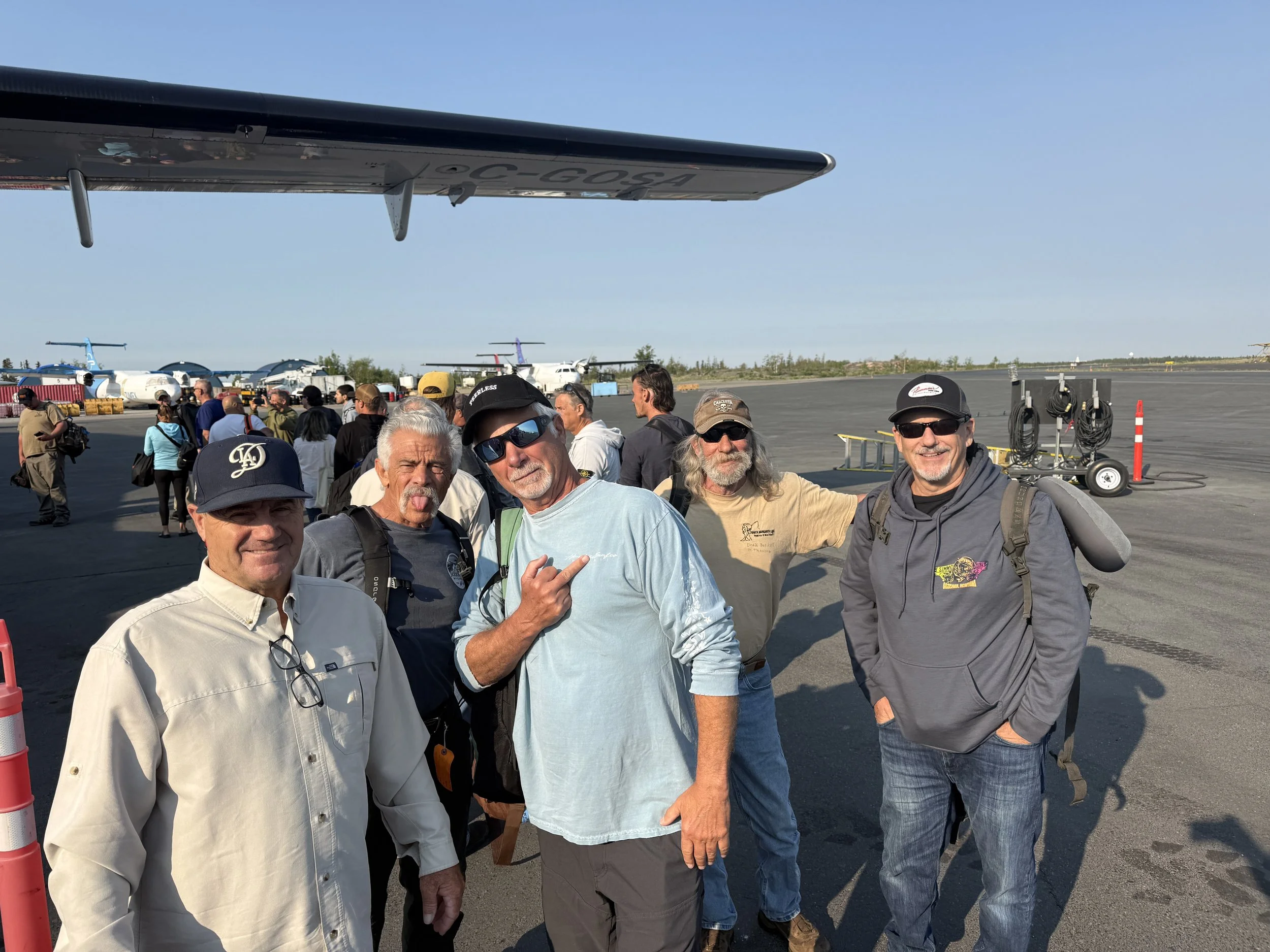
Saturday morning, Summit Air lifted us off the tarmac for the final leg: an hour and ten minutes of jaw-dropping scenery that makes you forget every commercial flight you've ever endured. As the ATR descended toward the main Plummer's lodge on Great Bear Lake, the water below was so crystalline you could see what looked like submerged logs along the bottom. Only they weren't logs. They were massive lake trout, finning in the shallows like prehistoric submarines.
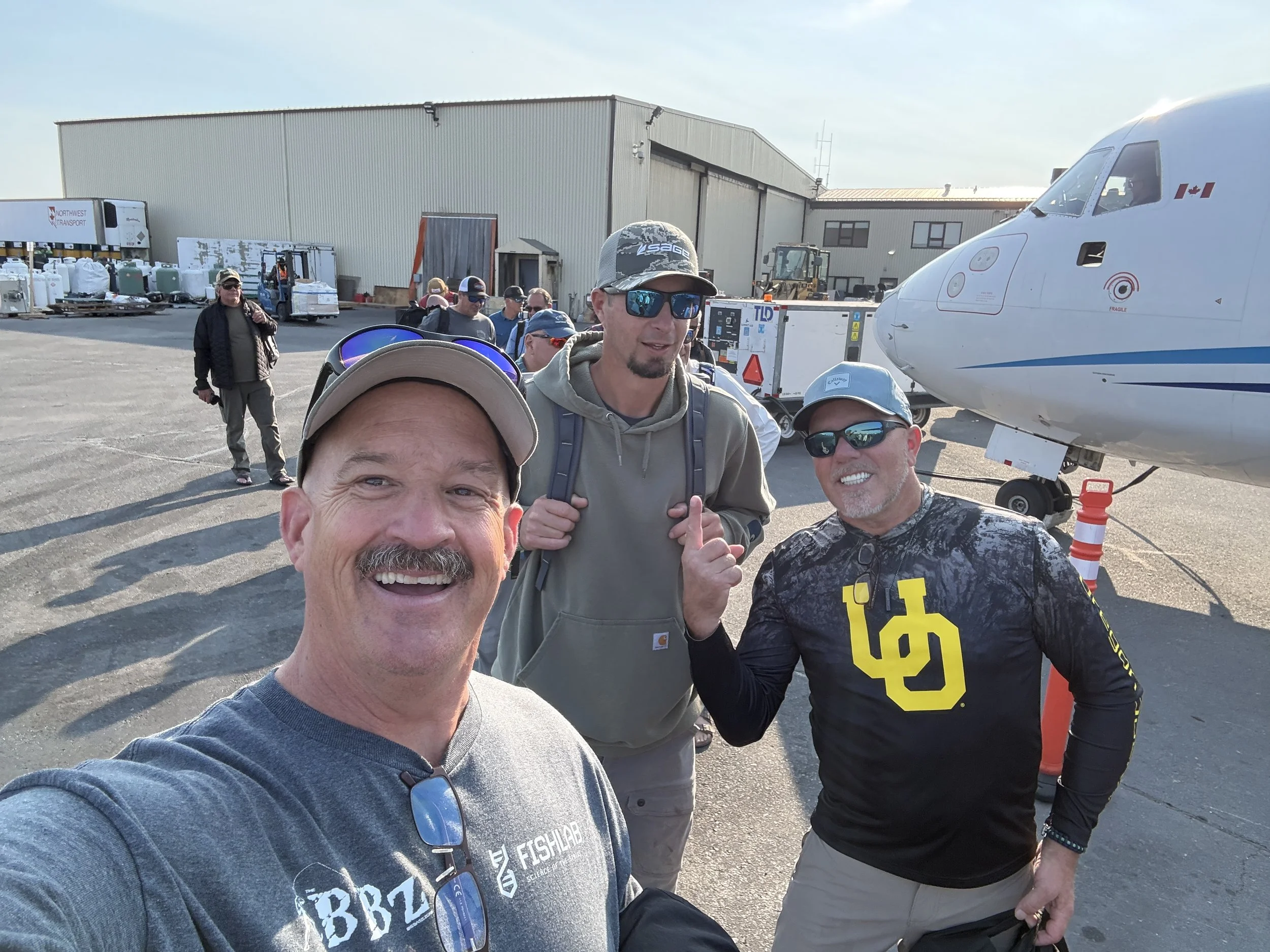
We touched down on the legendary airstrip — a piece of land carved out by Chummy Plummer and his father back in the early days of Arctic aviation. Chummy got his pilot's license before he could legally drive a car. At fifteen years old, he was already guiding at Plummer's Great Slave Lake Lodge. That kind of legacy isn't something you read about in a brochure. It's something you feel under your boots as you walk down the path from the strip, swatting the first wave of mosquitoes, toward the boats that will ferry you to the main lodge.
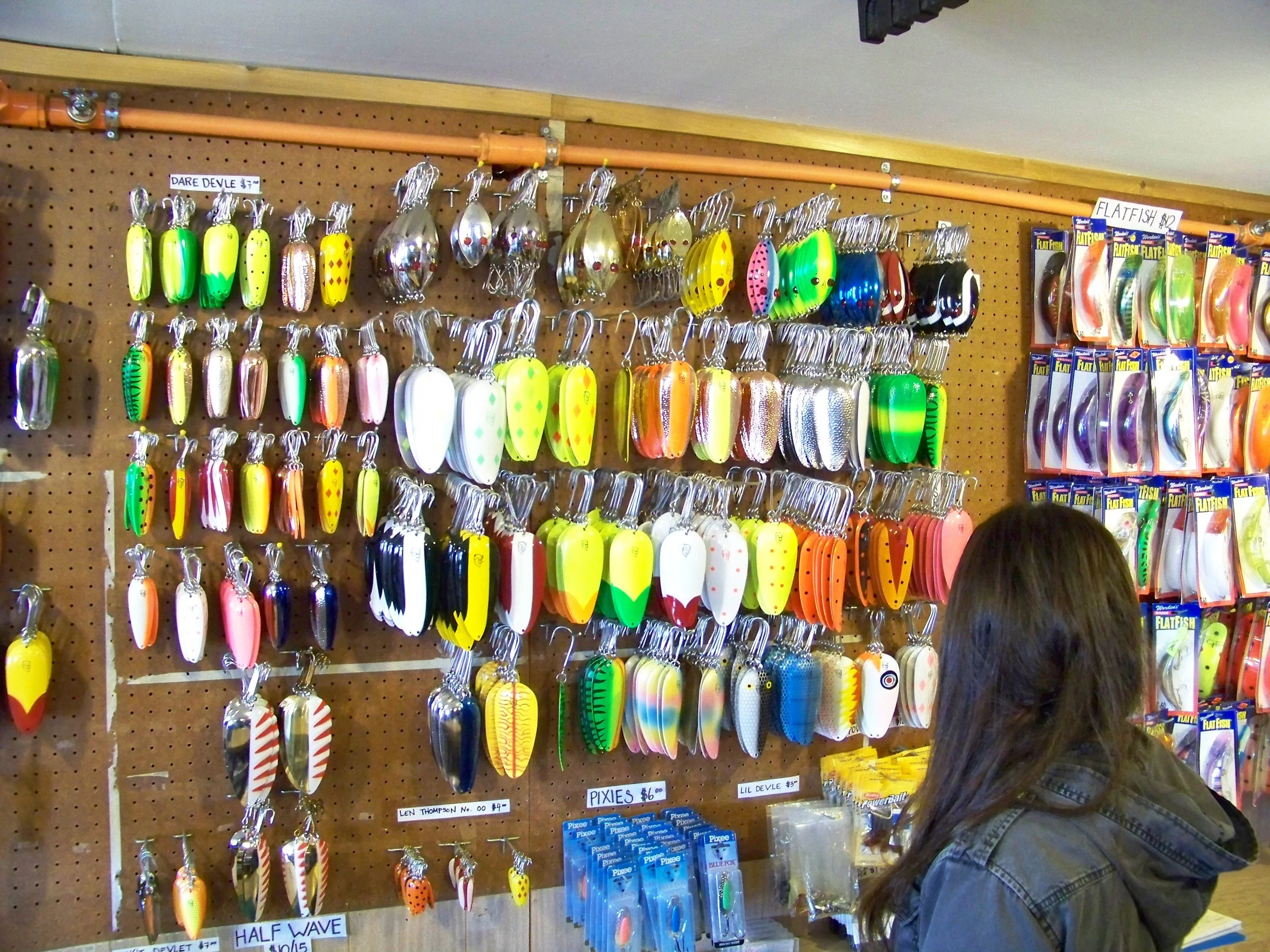
After a quick bite and a stop at the tackle shop — where we picked up a few essentials and marveled at the fact that we could now get our fishing licenses online, no paperwork drama — our pilot Colin fired up the float plane. The hop from the main lodge to the Arctic Circle Outpost is where the real magic begins.
Arctic Circle Outpost: Self-Guided, Professionally Supported:
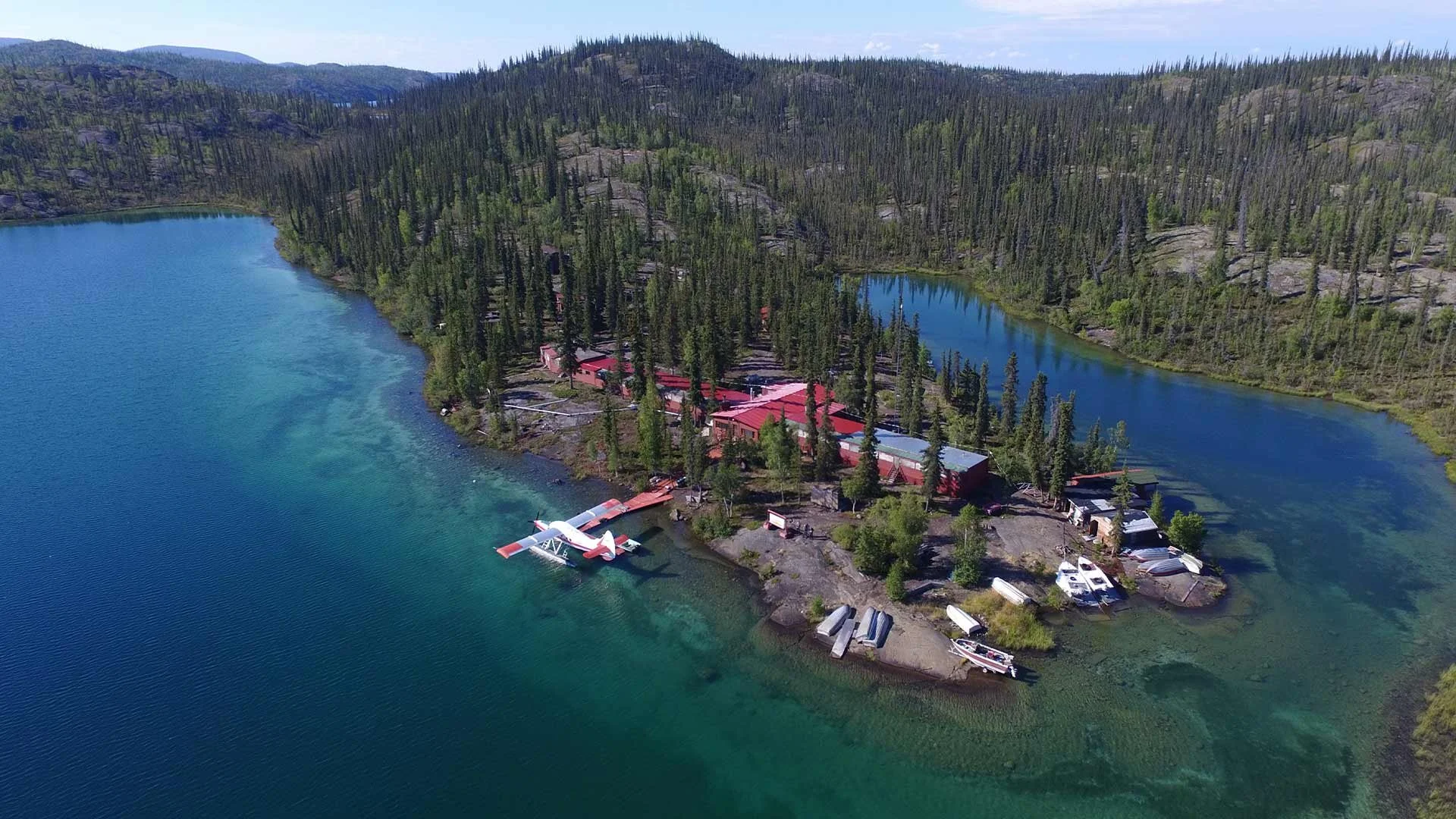
The Arctic Circle Outpost sits on the McTavish Arm of Great Bear Lake, a location that has drawn adventurous anglers for decades. Originally operated as an independent lodge, Arctic Circle shared this arm with Branson's Lodge before economic hardships in the late 1980s and early 1990s shuttered several operations. The NWT Government stepped in to rebook displaced anglers, and eventually, Plummer's — already the first family of Arctic sportfishing — took over management of Arctic Circle as an outpost camp. Today, it operates as a self-guided experience, which is exactly how our crew prefers it. No hand-holding. No babysitting. Just you, your boat, and 12,000 square miles of possibility.
But "self-guided" doesn't mean "abandoned." Far from it:
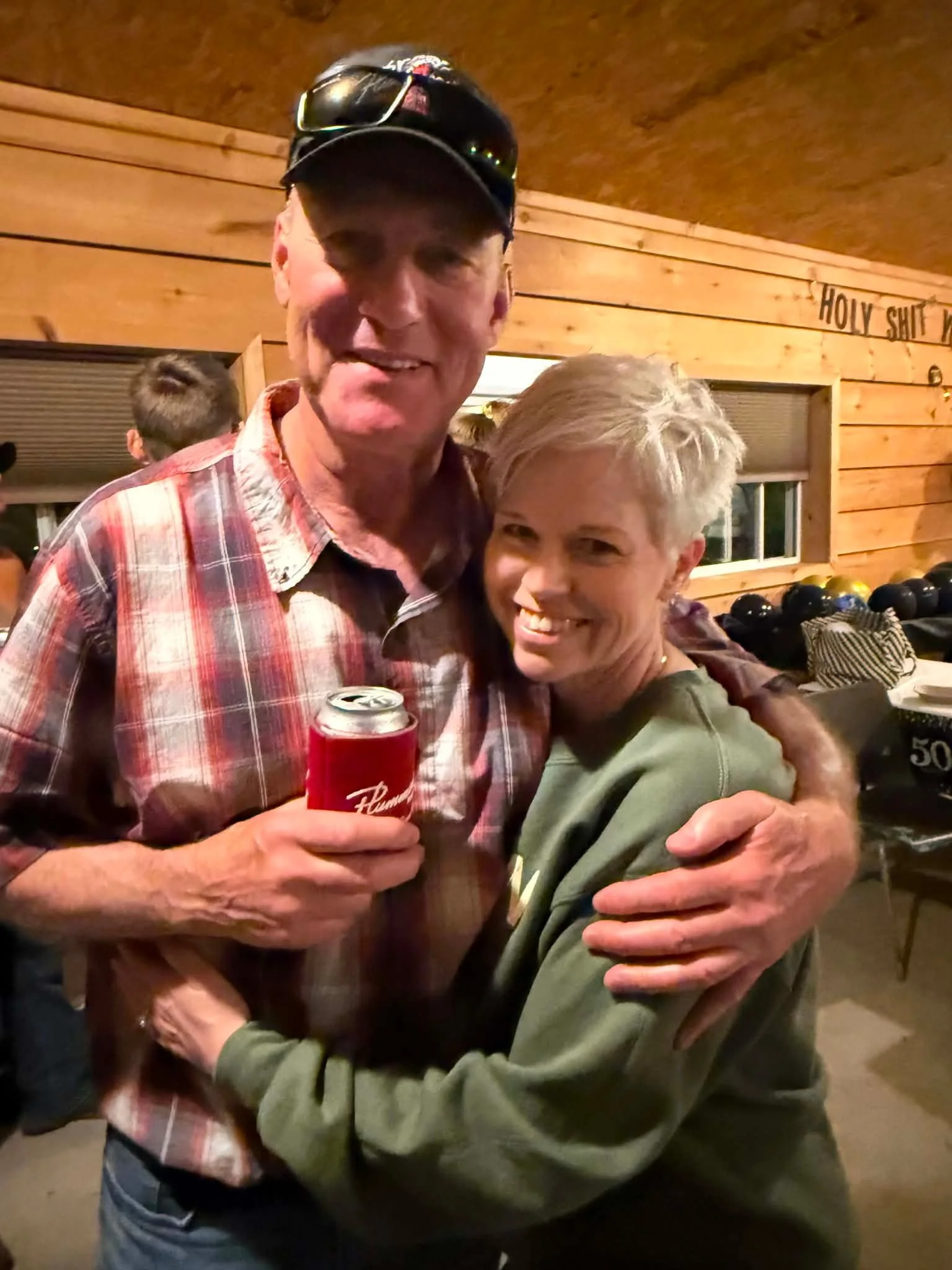
Tina and Darrell Hughson
We were greeted by Tina and Darrell, our camp hosts for the week — a duo so professional, so dialed-in, that you'd swear they'd been doing this since the Trudeau administration. These aren't just camp hands. They're the heartbeat of the outpost.
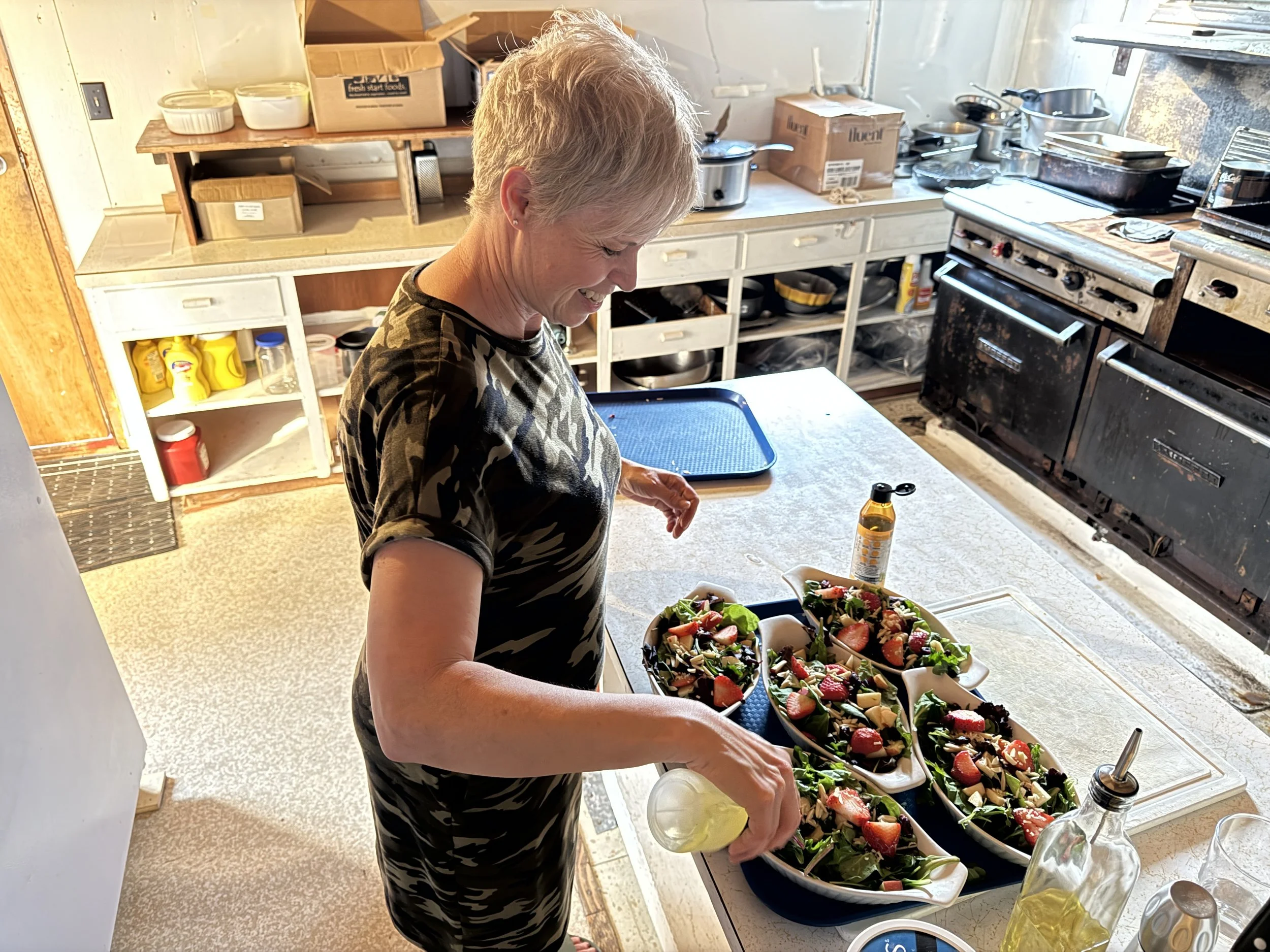
Tina — her cooking alone is worth the flight. She turns simple ingredients into meals that make you forget you're hundreds of miles from the nearest grocery store. Darrell — his wit is sharper than a fillet knife, his humor dry enough to make a Canadian blush, and his work ethic? The man will get beat up by mosquitoes to fill your gas tank, check your motor, and make sure the lodge is fueled and running smooth. He does it all with a smile and a joke, and by the end of the week, you feel like you've known him for years.
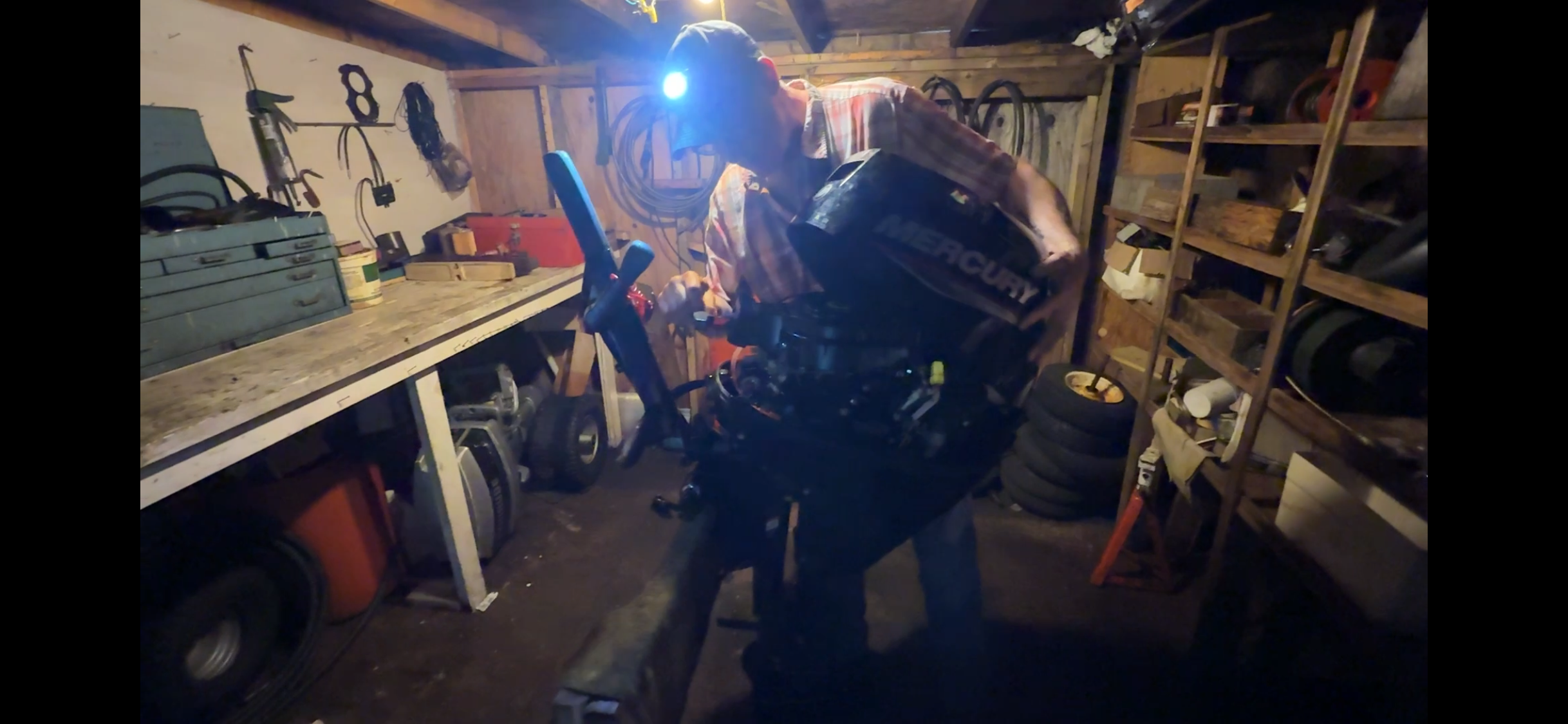
In the Arctic, where a forgotten wrench or a missed meal can turn a dream trip into a survival story, having Tina and Darrell in your corner is the difference between a good week and a legendary one.
The Guides: The Unsung Heroes of Great Bear:
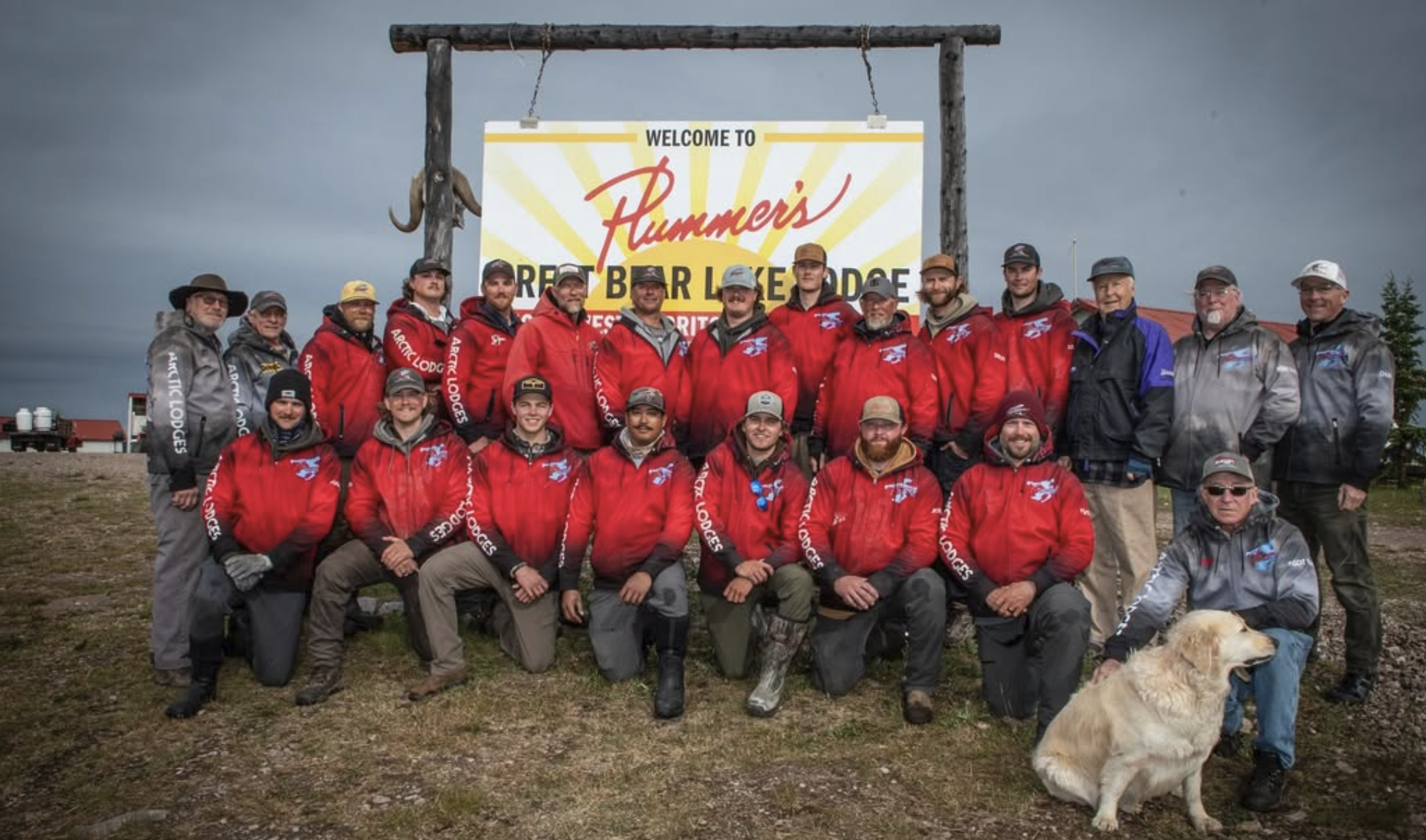
And while we're talking about the people who make this place magic, we need to talk about the guides.
Plummer's employs some of the most well-educated, seasoned guides of any outfit on the planet. We're talking about men who have fished these waters for 10, 20, 30 years — guys whose names are literally attached to the geography. Islands, humps, reefs named after them. You say "Steve's NS" and every regular knows exactly where you mean. These guys have the knowledge, and more importantly, they work together. They share information. They collaborate. They make sure that every angler — man, woman, or child — who shows up at Plummer's has the opportunity to be put on fish and come home with stories that will last generations. This is what you can expect at the main lodge, but you better do your research if you are headed to the Outpost. This place is all on you.
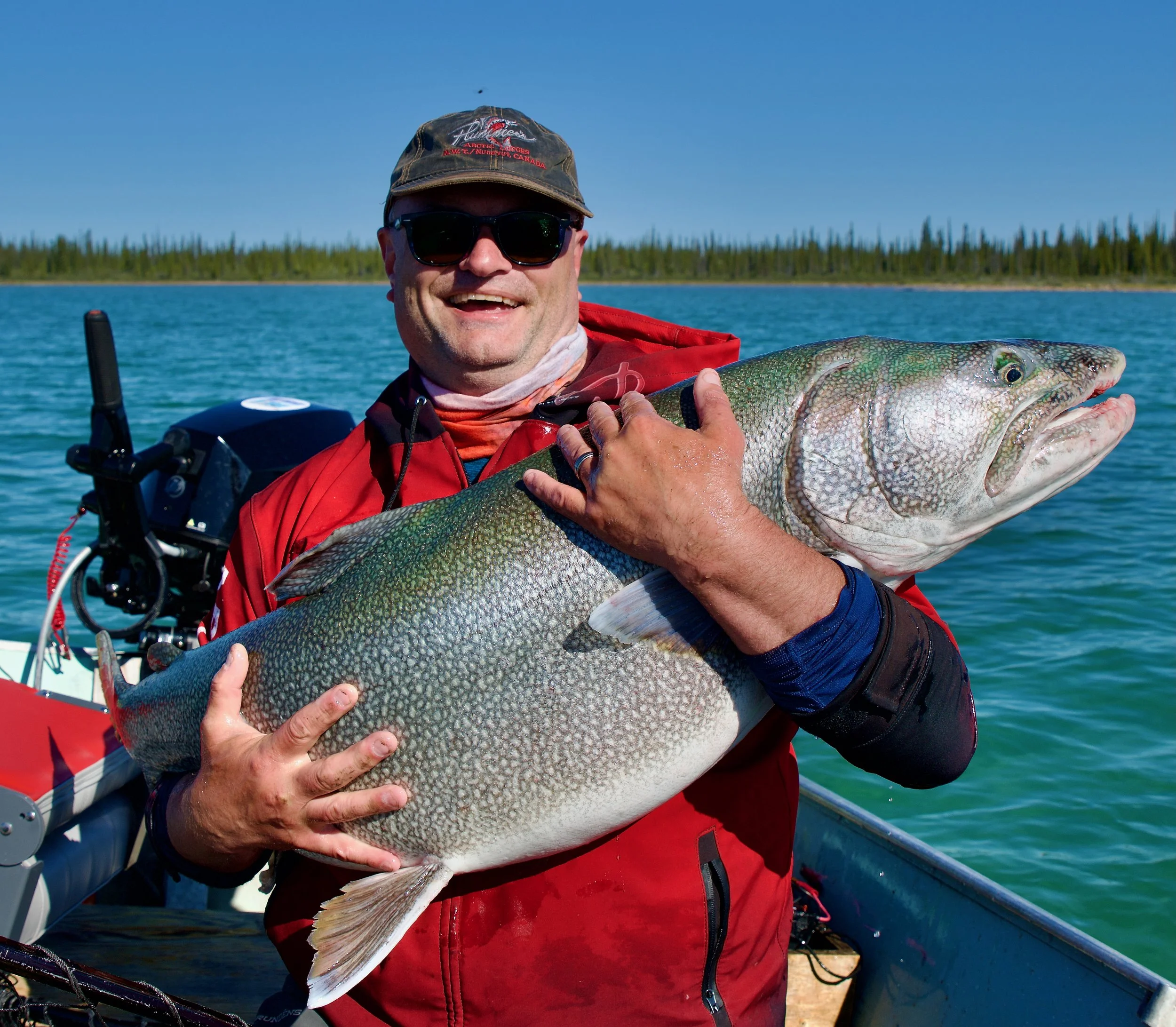
Chris Ireland, good friend of Ken Gold and guide to his 45-pound monster this year, is one of those guys. The kind of guide who doesn't just put you on fish — he teaches you. He shares the history, the technique, the why behind every decision. And when you leave, you're not just a better angler. You're a better storyteller. Chris was one of the main guides back in the '80s for the main lodge and now spends time with his friends Harold and Kenny.
The Weather: Four Seasons in Seven Days:
Before we even wet a line, the Arctic reminded us who's boss.
I pulled Rob aside as we were getting our gear together and told him something I've told every first-timer: "Robby, this is an experience you'll never have anywhere else on Earth. But here's the crazy thing — when we get here, you think a week is a long time. It's not. It's a blink. The time at Plummer's runs as swift and fast as the Tree River. You have to embrace every moment."
And boy, did we get moments.
The week started with a mosquito assault that would make a biblical plague look like a mild inconvenience. I'm talking about 747-sized mosquitoes — the kind of bloodsucking varsity that made me wonder if I was going to give birth to a litter of mosquito pups sometime next week. Swatting became a full-body workout.
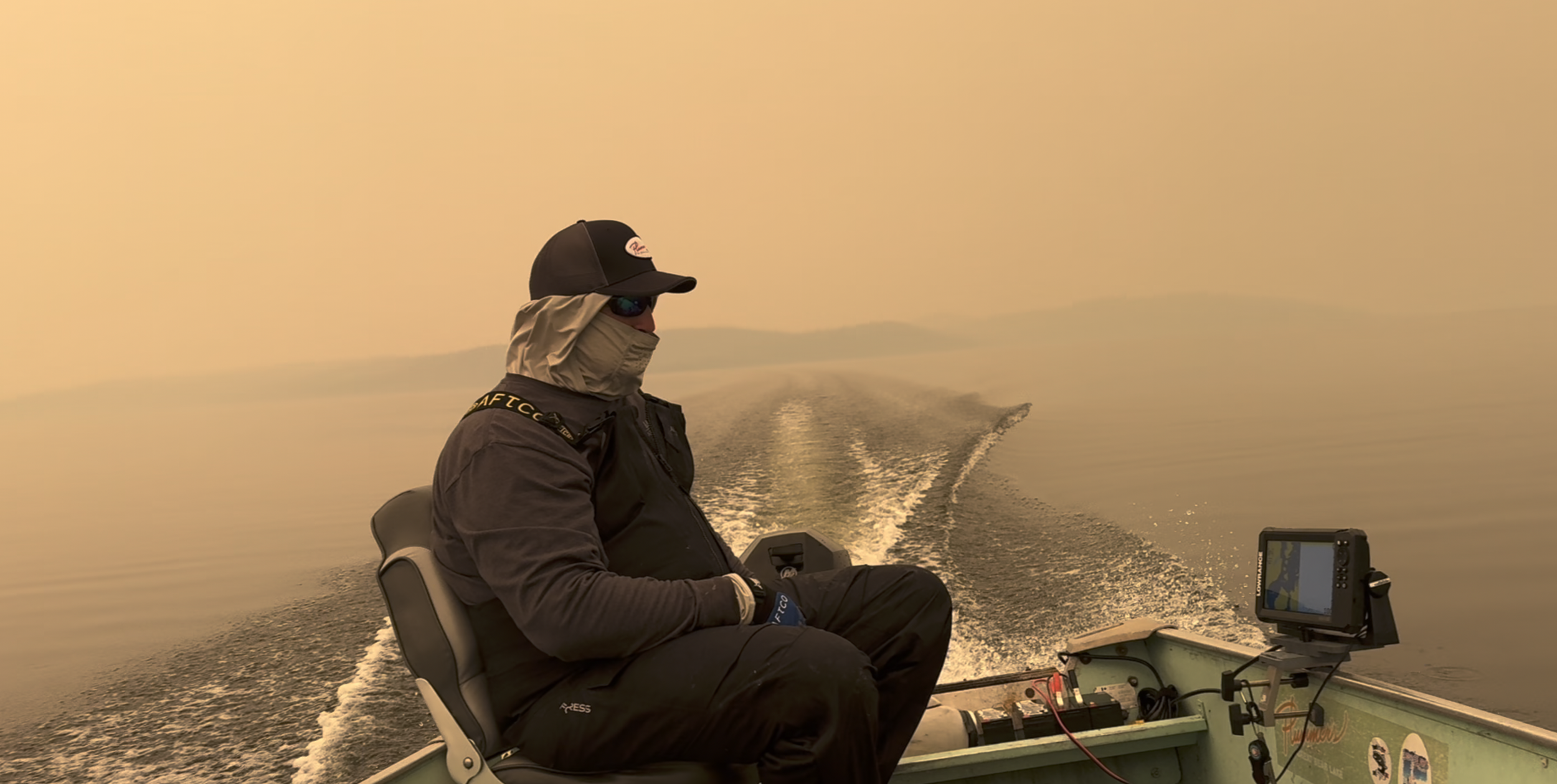
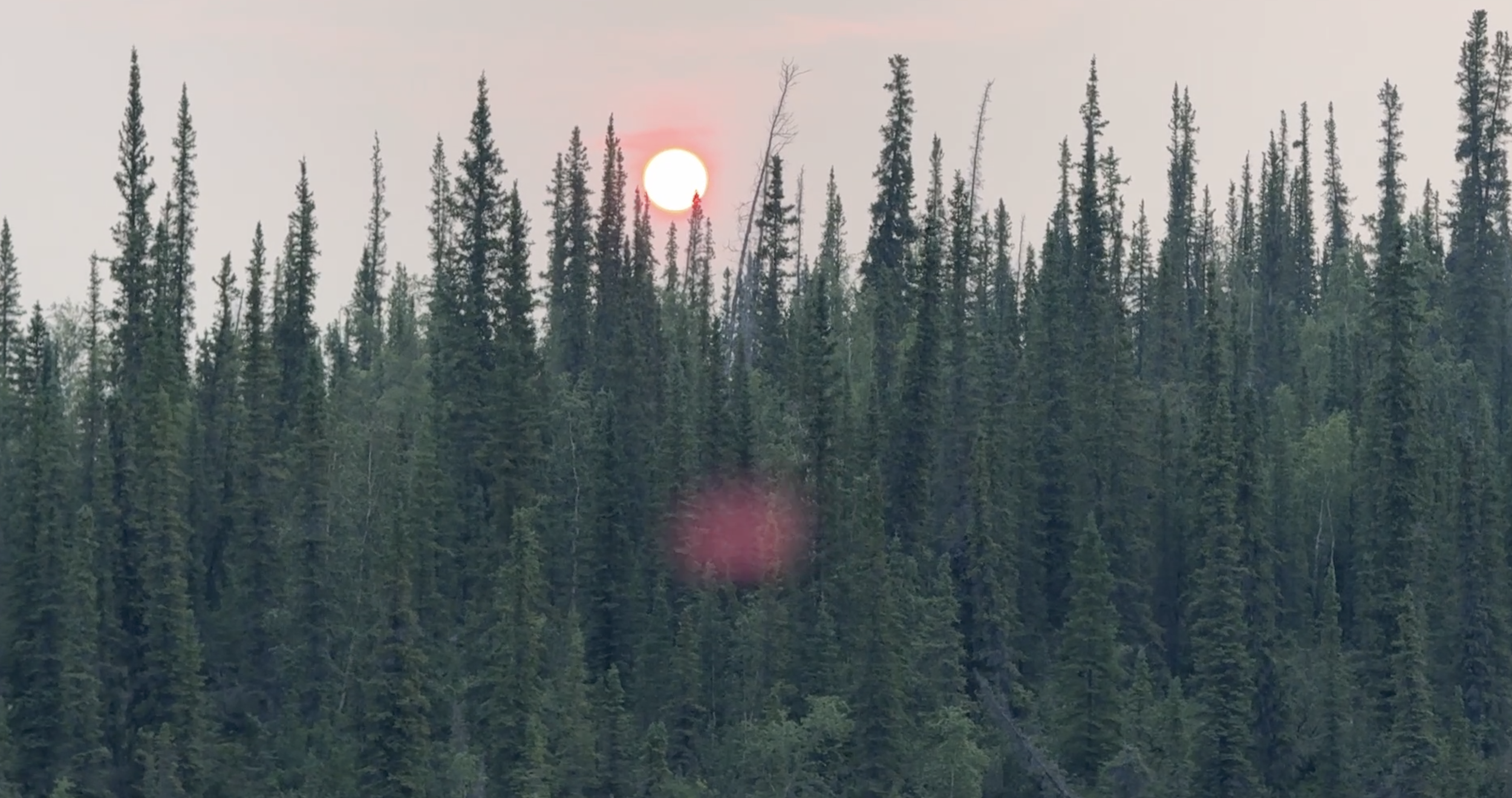
But the real story was the water. Normally, when we arrive for the first week of the season, the main lake still has ice. Our area tends to ice out a little sooner, but this year was different. The water around the lodge — usually a bone-chilling 40-something degrees — was already 61°F in the main lake and pushing 70°F in the back coves. For Great Bear Lake in early July, that's like finding a hot tub in a freezer. We'd never seen it, and we'd never heard of it. And throw in a massive NWT wildfire and smoke that made you feel like a 2-pack-a-day smoker for 20 years, with bloodshot eyes from the low visibility after ash-filled air — and that was just the start on the first day.
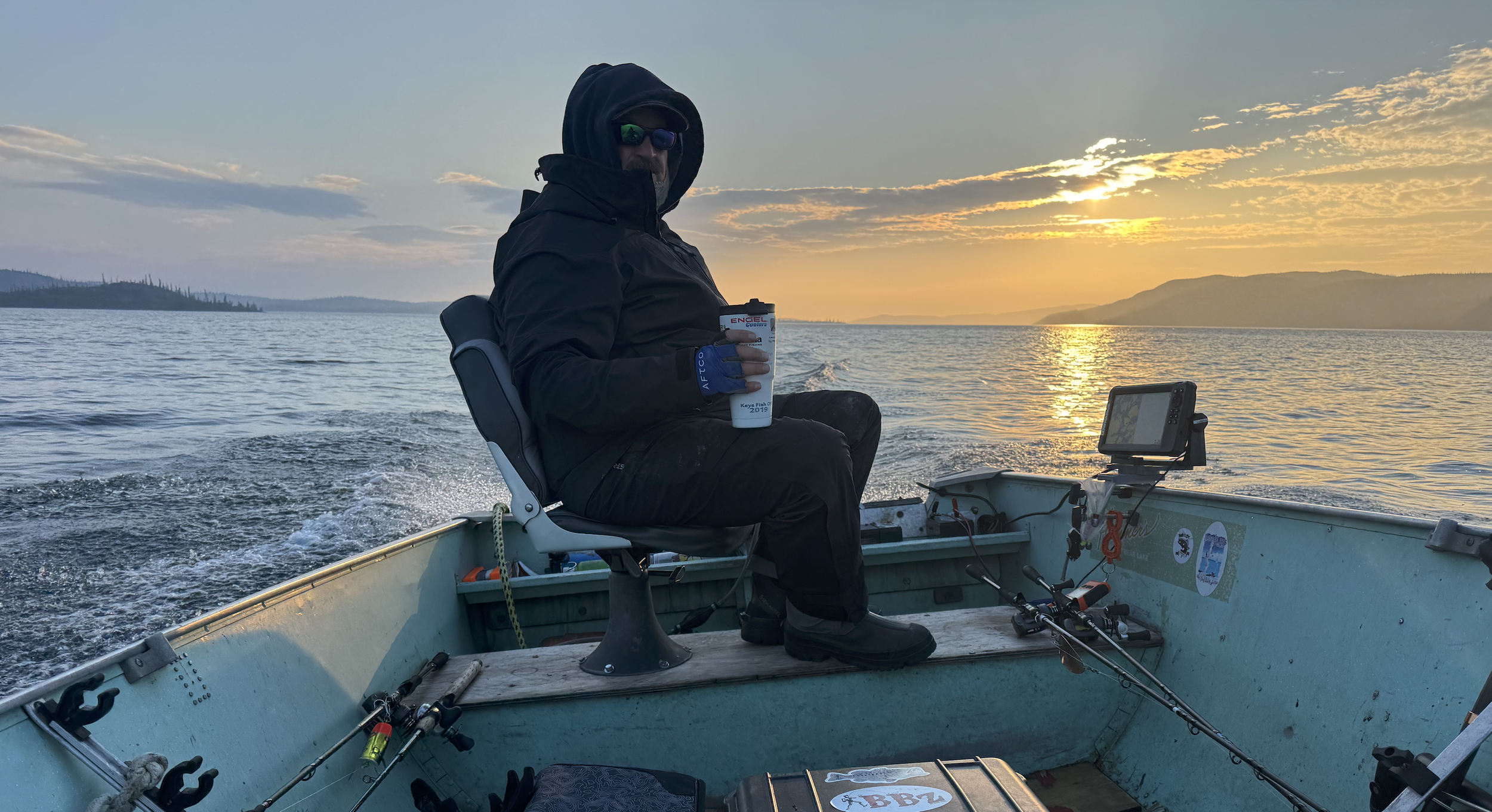
The fishing was tough. Those big, old, wise lake trout weren't where they were supposed to be. The warm water had them scattered, confused, and downright stubborn. But then, as if the Arctic decided to flip the script, a storm rolled through. Pushed the wildfire smoke down from the Canadian fires, dropped the temperature, and suddenly we went from shorts and T-shirts — if you could manage the mosquito bites — to full winter gear. Earlobes frozen. Hands aching. Not from fighting fish, but from the sheer, biting cold.
That's the Arctic. She gives you everything, sometimes all at once.
The Arsenal: Billy Jigs and the Weapons of Choice:
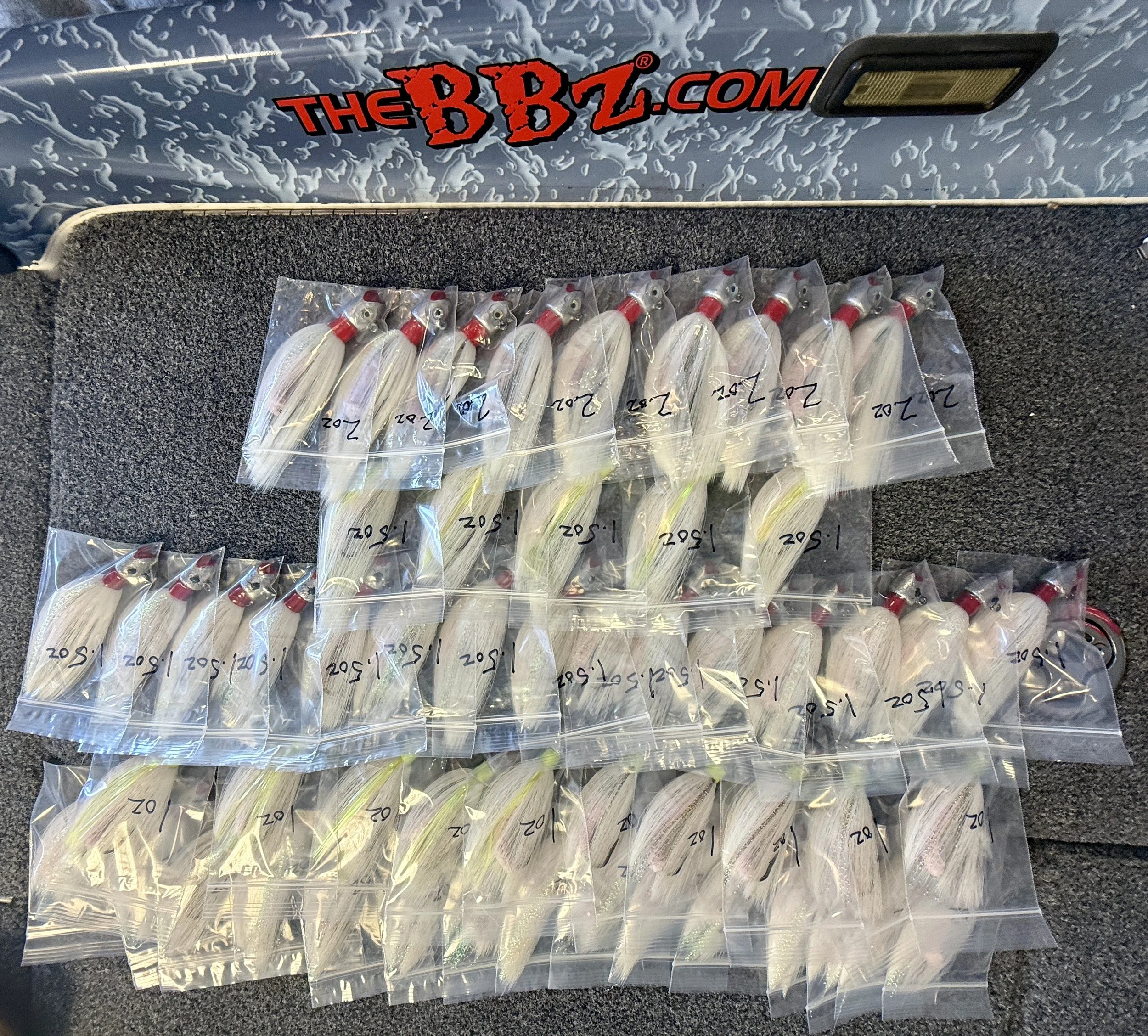
Every serious angler knows that gear matters, but on Great Bear, it's everything. This year, I ran Okuma Guide Select travel rods paired with Okuma reels — the kind of setup that can handle a 50-pound freight train without blinking. And because I'm a firm believer in knowing what's under your boat, we had Lowrance graphs on every boat, extra batteries in tow, and enough tackle to outfit a small navy.
But the real secret weapon? The Billy Jigs:
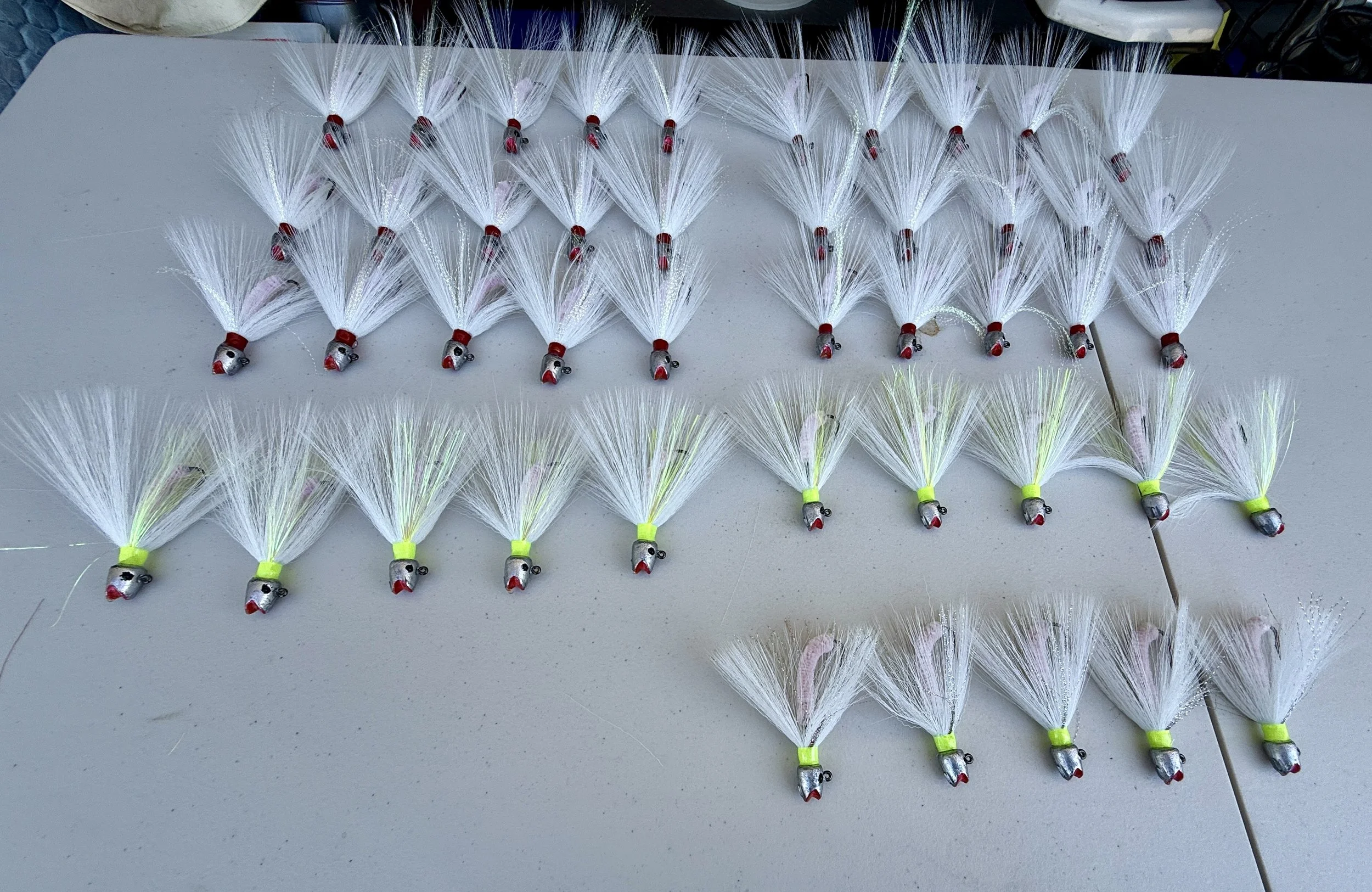
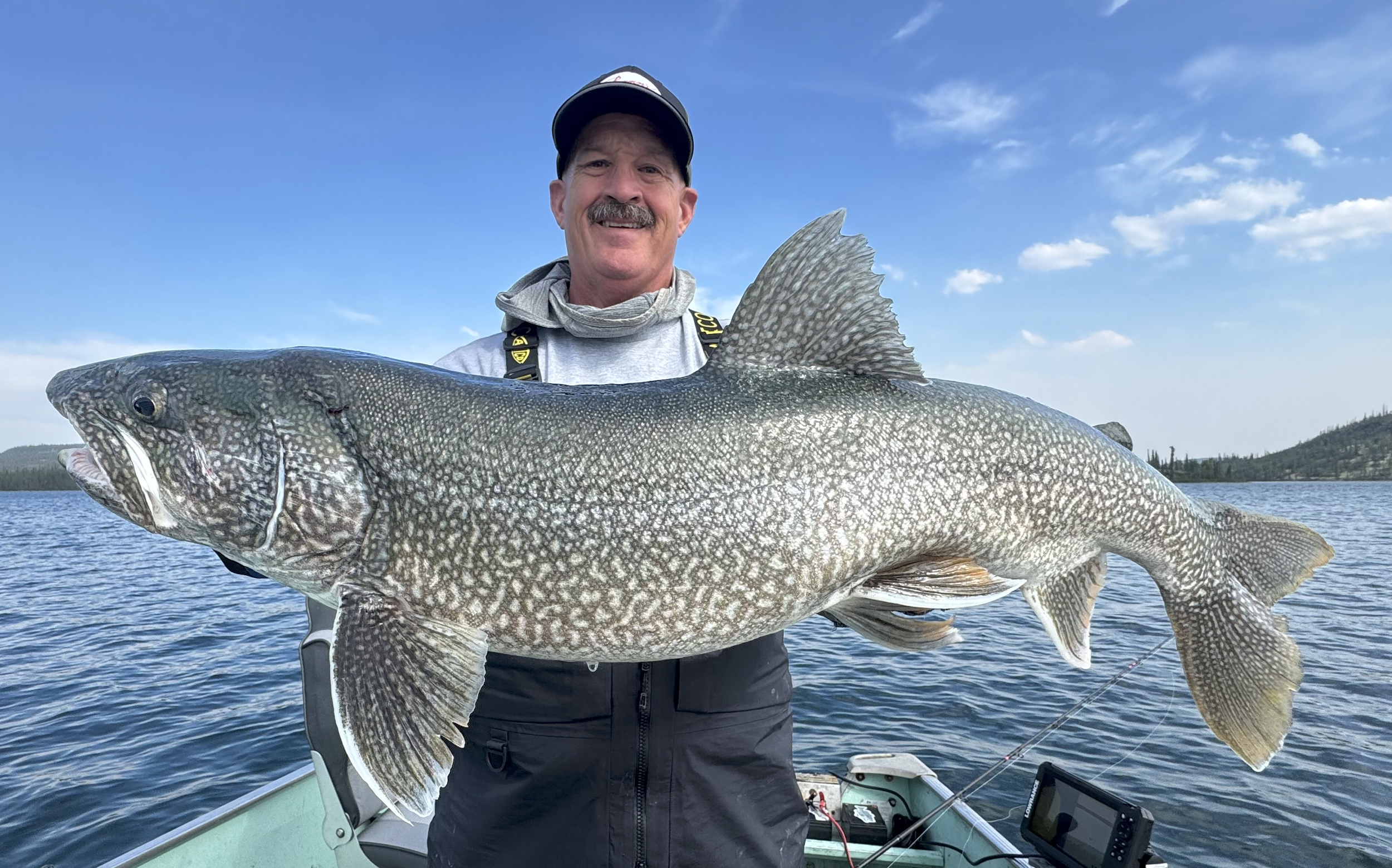
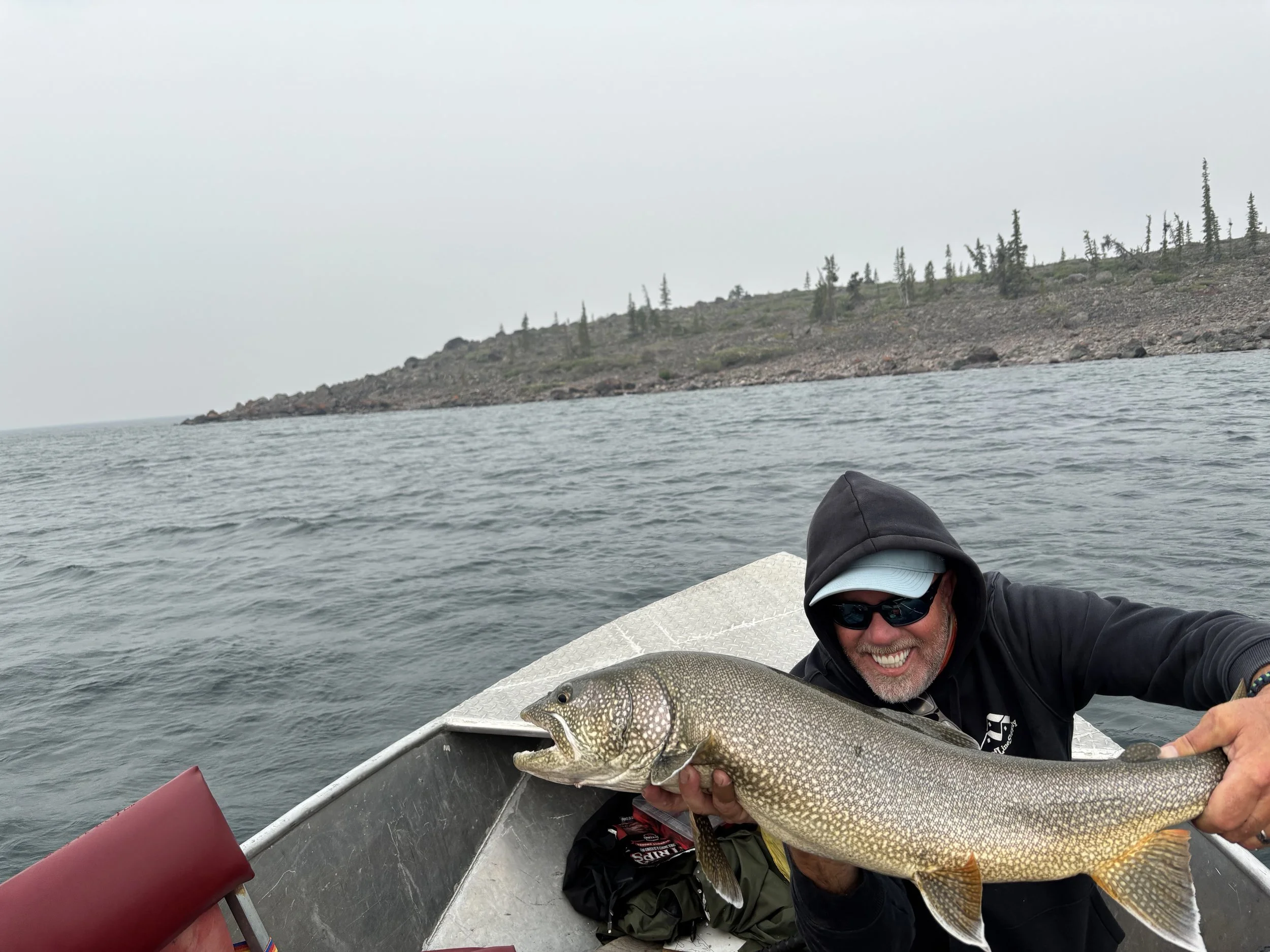
For the past few years, I've been refining these homemade jigs — tweaking the weight, the trailer, the action — until I got them dialed in for Great Bear's unique fishery. Last year, Sean stuck a 50-pound lake trout on one. This year, Ken Gold — one of the OG Plummer's regulars — asked for a few, and promptly went out and stuck a 45-pound monster — the biggest fish of our group.
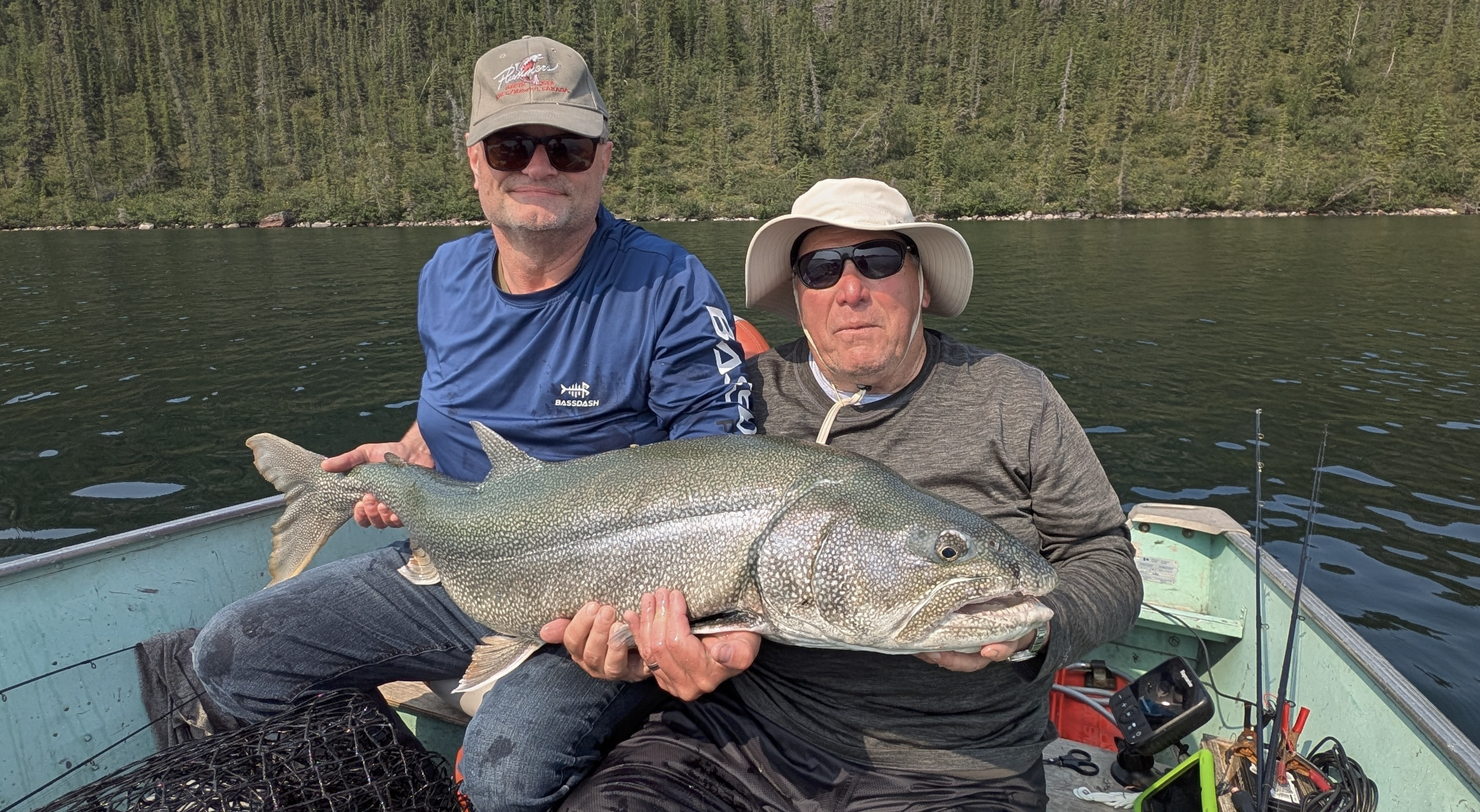
Ken's photo with his friend and guide Chris Ireland and their buddy Harold is the kind of shot that makes you want to book next year's trip before you've even unpacked from this one. Then Sean came through with a 37-pounder, and we had multiple fish in the 20-to-30-pound range throughout the week. For a group of self-guided anglers dealing with abnormally warm water and finicky fish, "spectacular" doesn't even begin to cover it.
The Power Behind the Pursuit: Mercury:
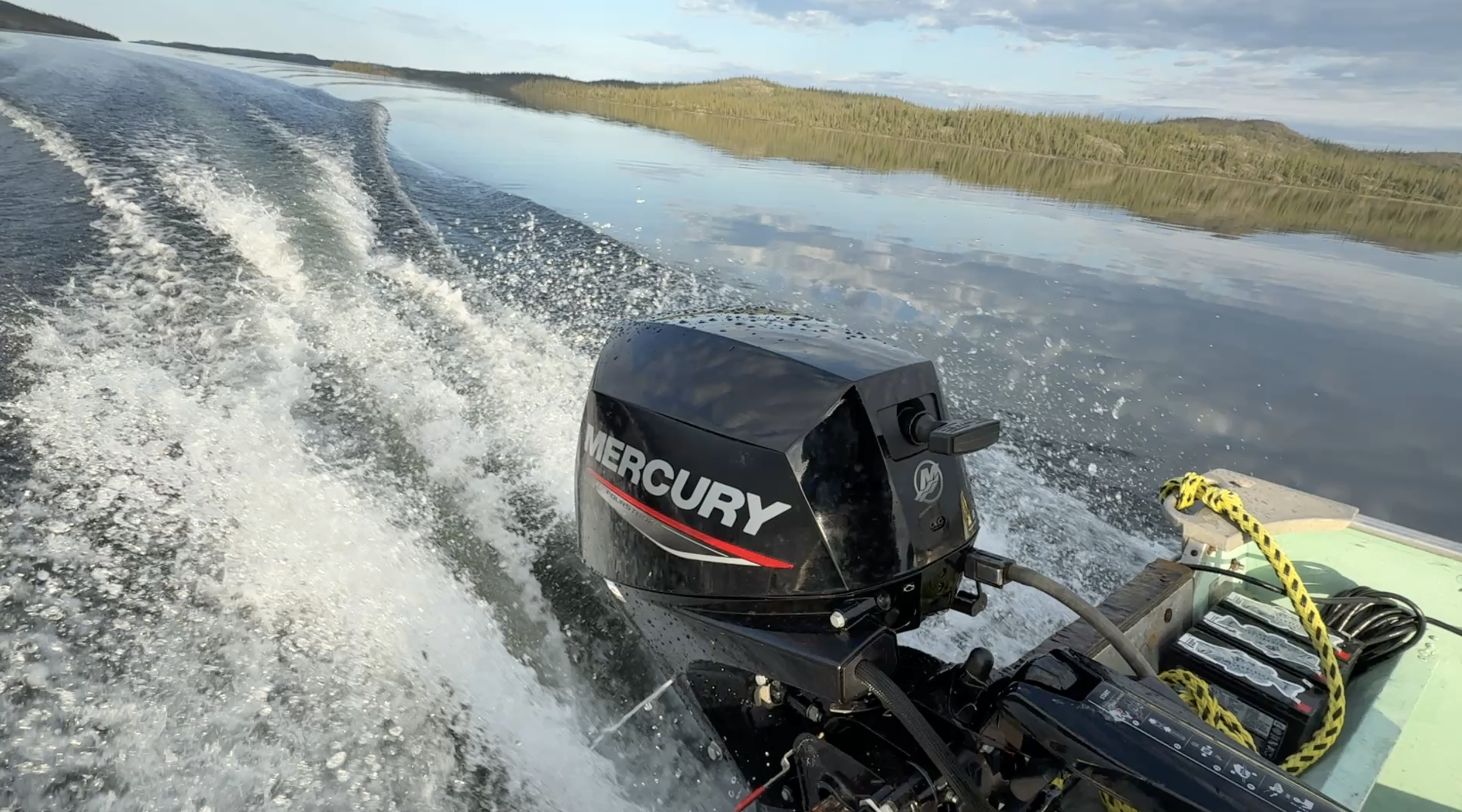
Now, let me tell you something about the unsung hero of every trip to the Arctic Circle — the motor on the back of your boat.
Every single boat at Plummer's Arctic Circle Outpost is powered by Mercury. And for the last five years, I've been running the same Merc up there. I fire that thing up at 5 AM and I don't turn it off until 8 PM — fifteen hours of non-stop, hard-running, lake-bashing punishment, day after day, and that motor never misses a beat. Not a hiccup. Not a cough. Just pure, reliable power that gets you to the fish and gets you home safe.
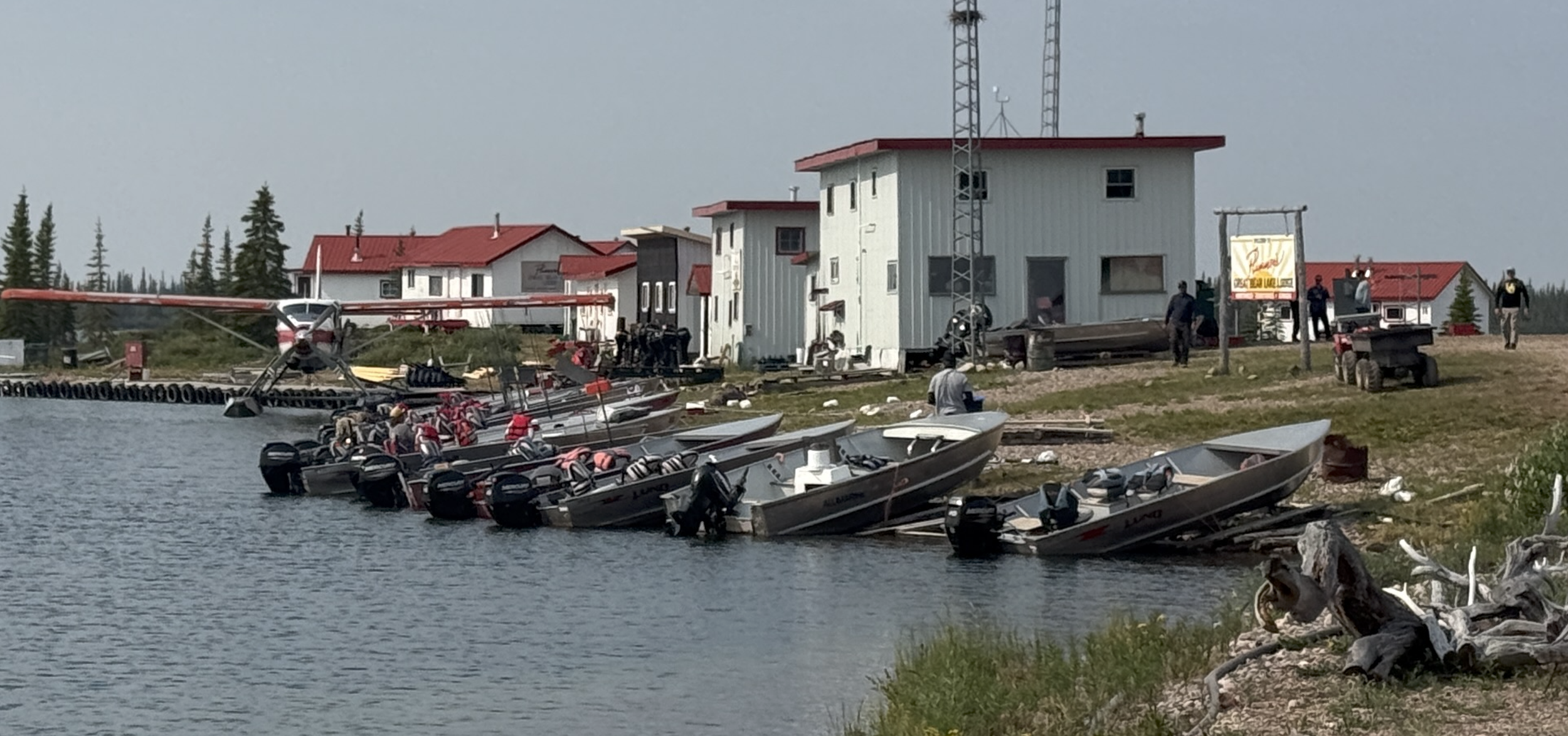
Up at the Arctic Circle, your outboard isn't just a piece of equipment. It's your lifeline. It's the difference between finding that pod of 30-pounders on a distant reef and being stuck at the dock watching the day slip away. When you're running 12,000 square miles of the most unforgiving water on the planet, you need a motor you can trust with your life. And for five straight years, Mercury has been that motor for me.
I'm proud to say I'm on the Mercury Pro Staff, and there's a reason for that. These engines are built for guys who don't know the meaning of "easy day." They're built for the Arctic. Built for the abuse. Built for the anglers who refuse to quit until the last ray of midnight sun has faded below the horizon.
When you're up at Plummer's, you don't just need a motor. You need a Mercury.
The Big Three: Baits That Built Legends:
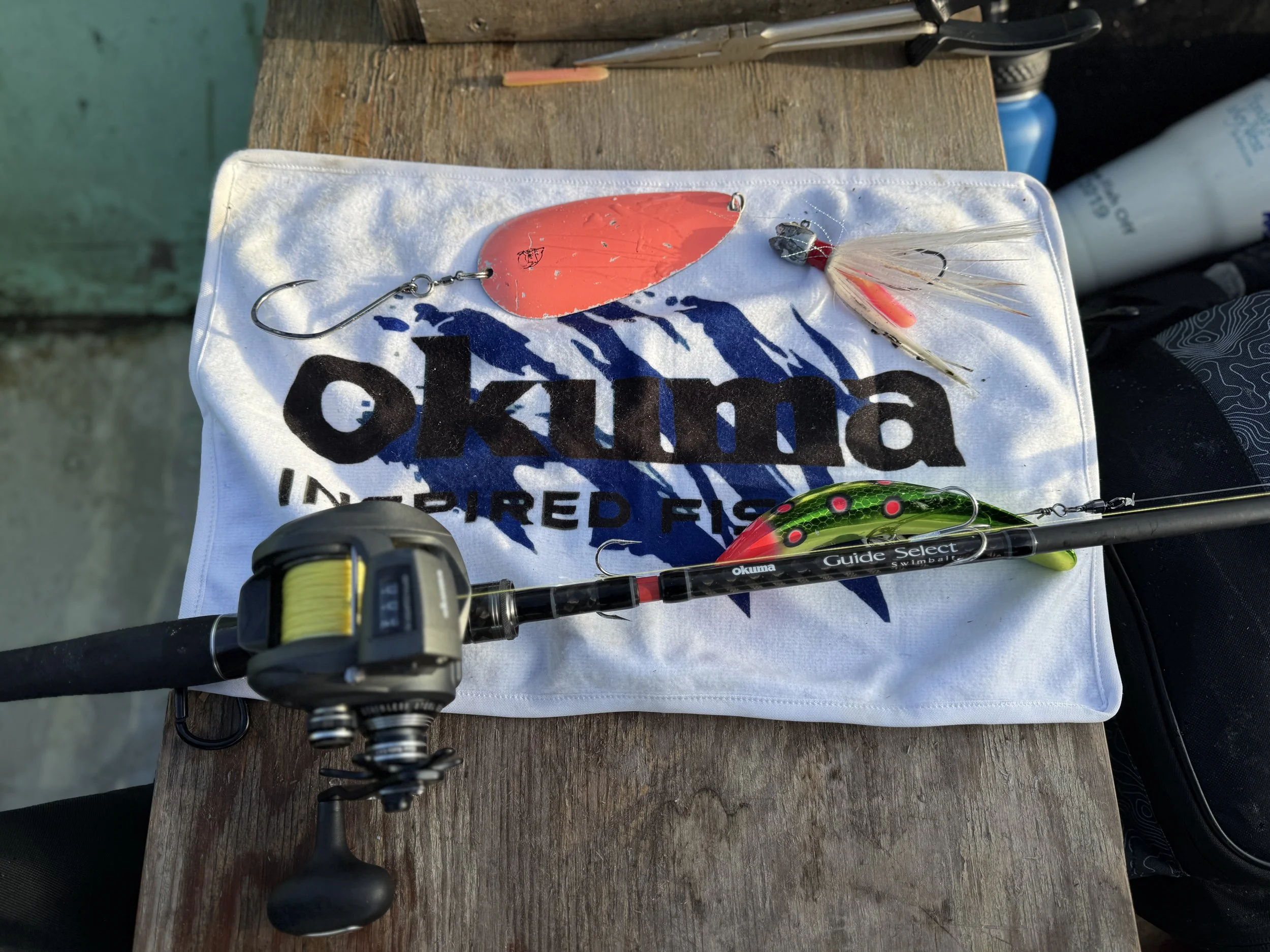
If you're planning your own trip to the Arctic Circle — and after reading this, you should be — there are three baits that need to be in your box, period:
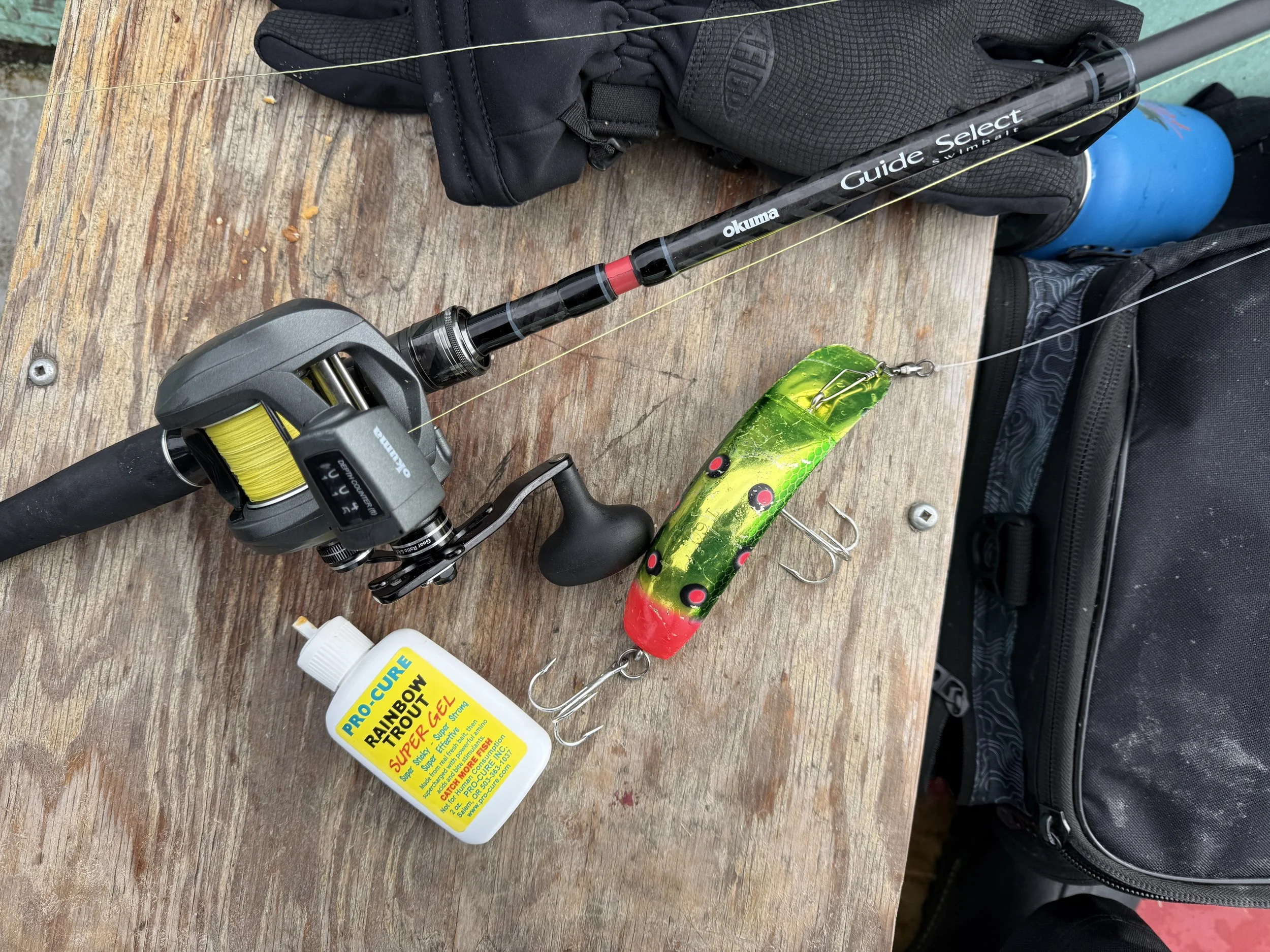
The T-60 Flatfish — The orange T-60 is practically a religion up here. It's the lure that built the reputation, and it still produces when nothing else will. Here is a sneak peek at one of Bill's custom jointed T-60+.
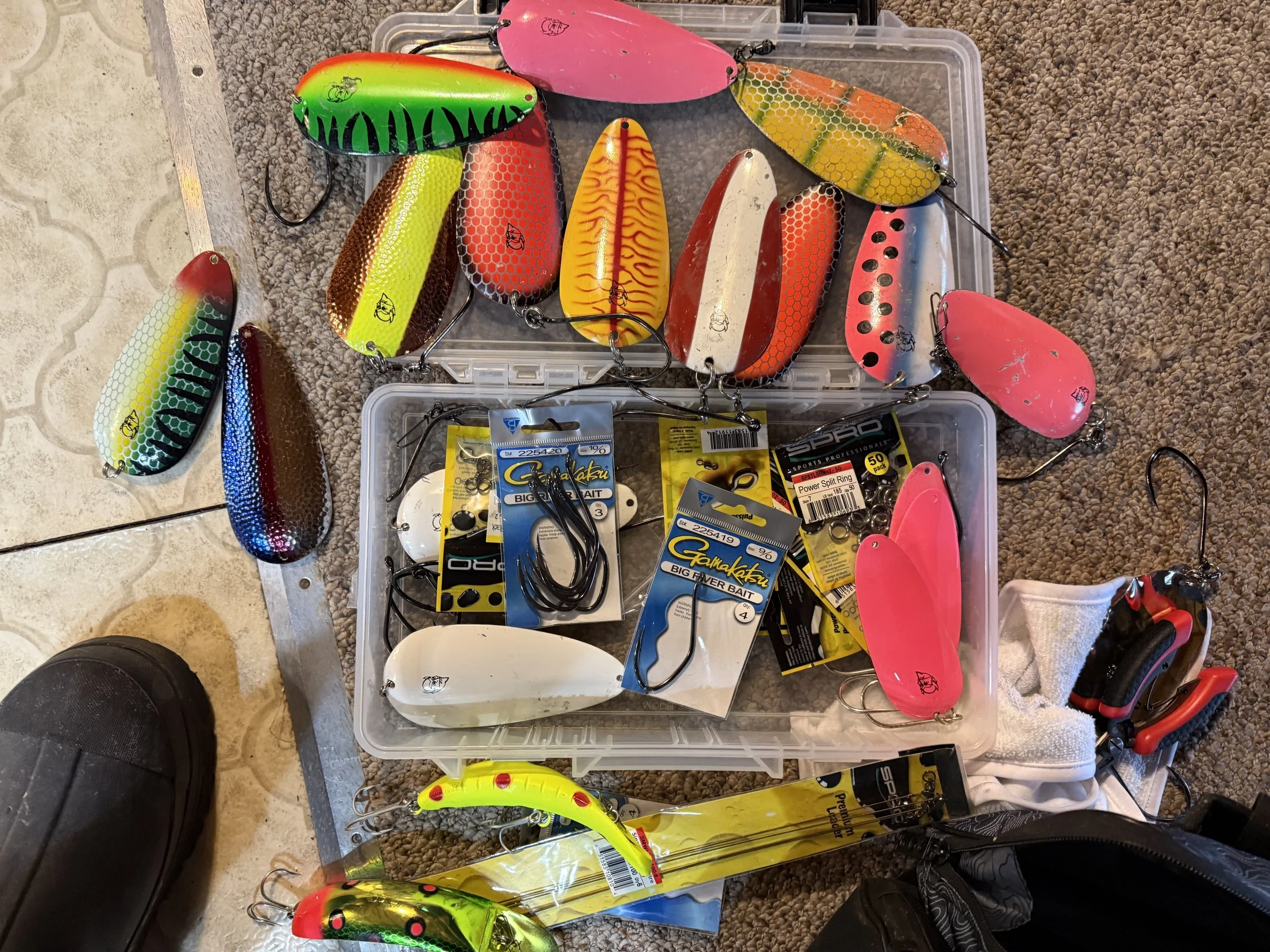
Husky Devil Spoons — Big, heavy, and built to trigger reaction strikes from fish that have seen it all.
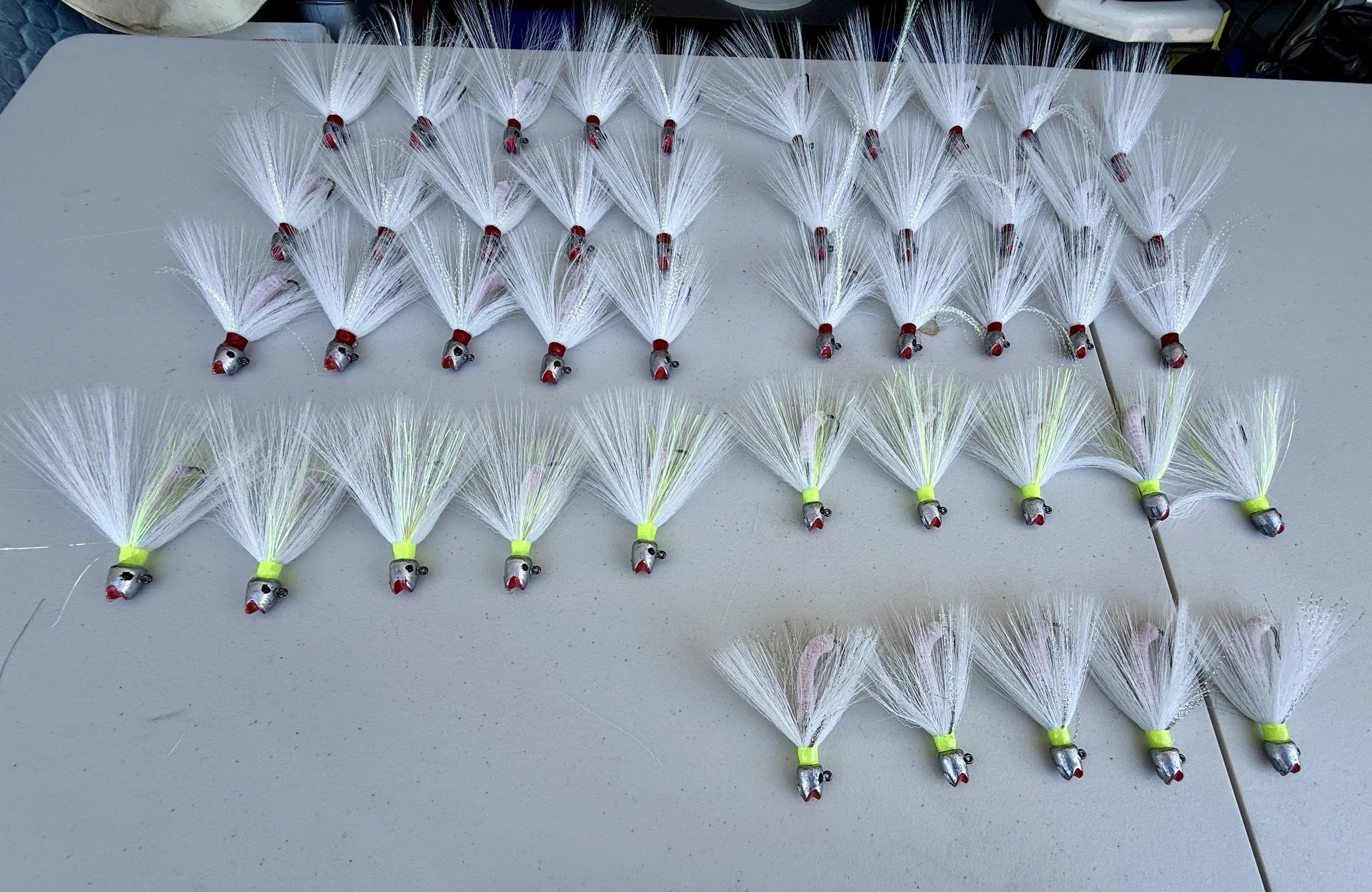
Jigs — Especially the Homemade Special — If you can get your hands on a Billy Jig with the special trailer, you might just hook into the trophy of a lifetime. These aren't mass-produced. They're crafted with intention, tested on the water, and proven on the biggest lake trout fishery on the planet.
The Hat Trick: More Than Just Trout:
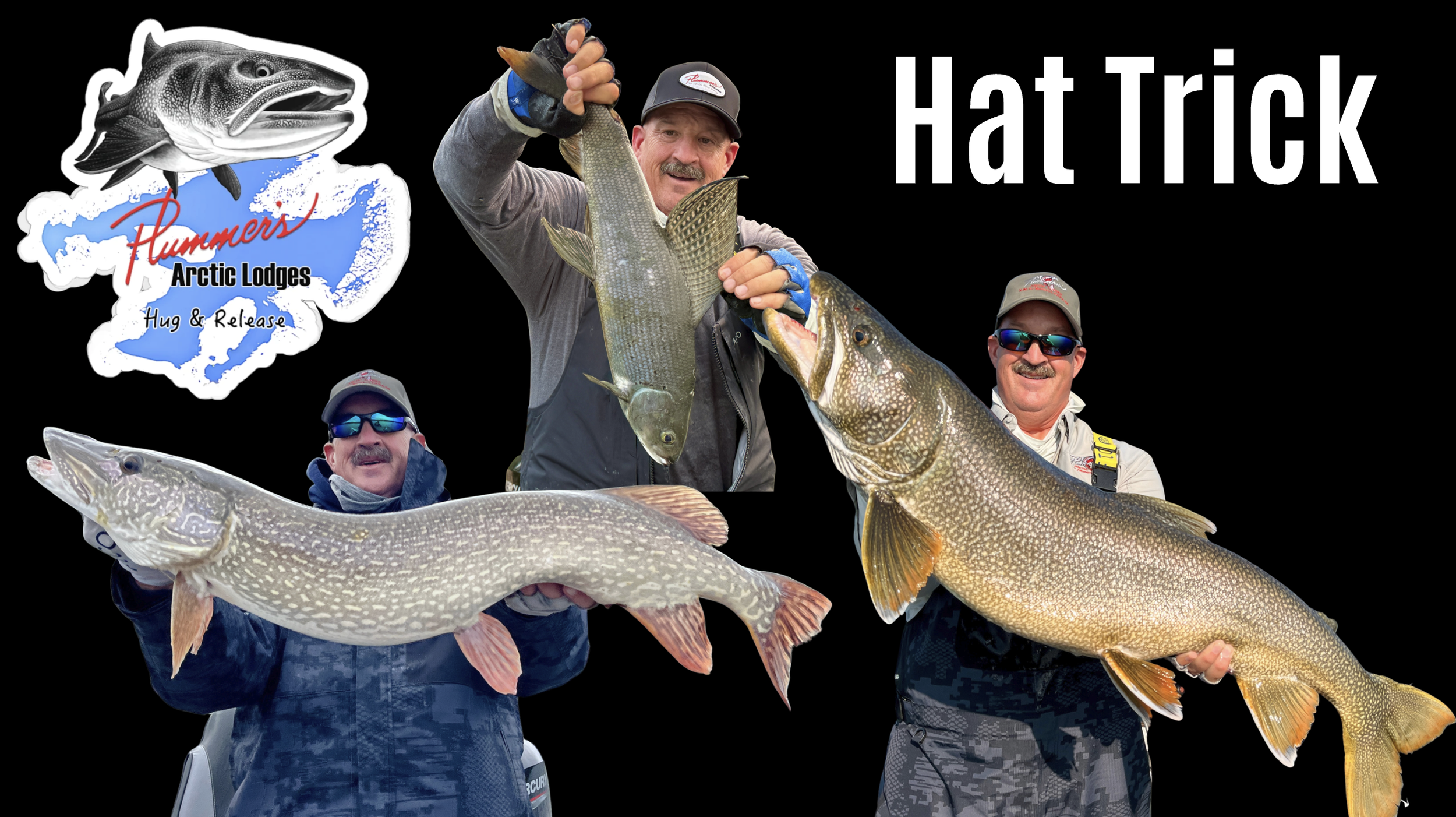
Now, if you're up at Great Bear and you've got a few hours to spare, do yourself a favor: go for the hat trick. This lake isn't just about lake trout. It's home to monster northern pike that patrol the shallows like aquatic wolves, and Arctic grayling so big they hold nine IGFA line-class world records.
Spend a morning chasing pike in the back bays. Spend an evening casting for grayling in the river mouths. And when you come back to the lodge with a story about all three species in one day, you'll understand why this place is called the Land of the Giants.
The Fish of a Lifetime — And the One That Got Away:
I won't lie to you. I was hunting my 50-pounder this year. It's the fish that haunts my dreams, the one that keeps me tying jigs at 2 AM, the reason I keep coming back. And when the week ended and I was packing my rods, I looked at that empty space on the wall where my 50-pound trophy photo should be, and I felt the familiar sting.
But then I got home.
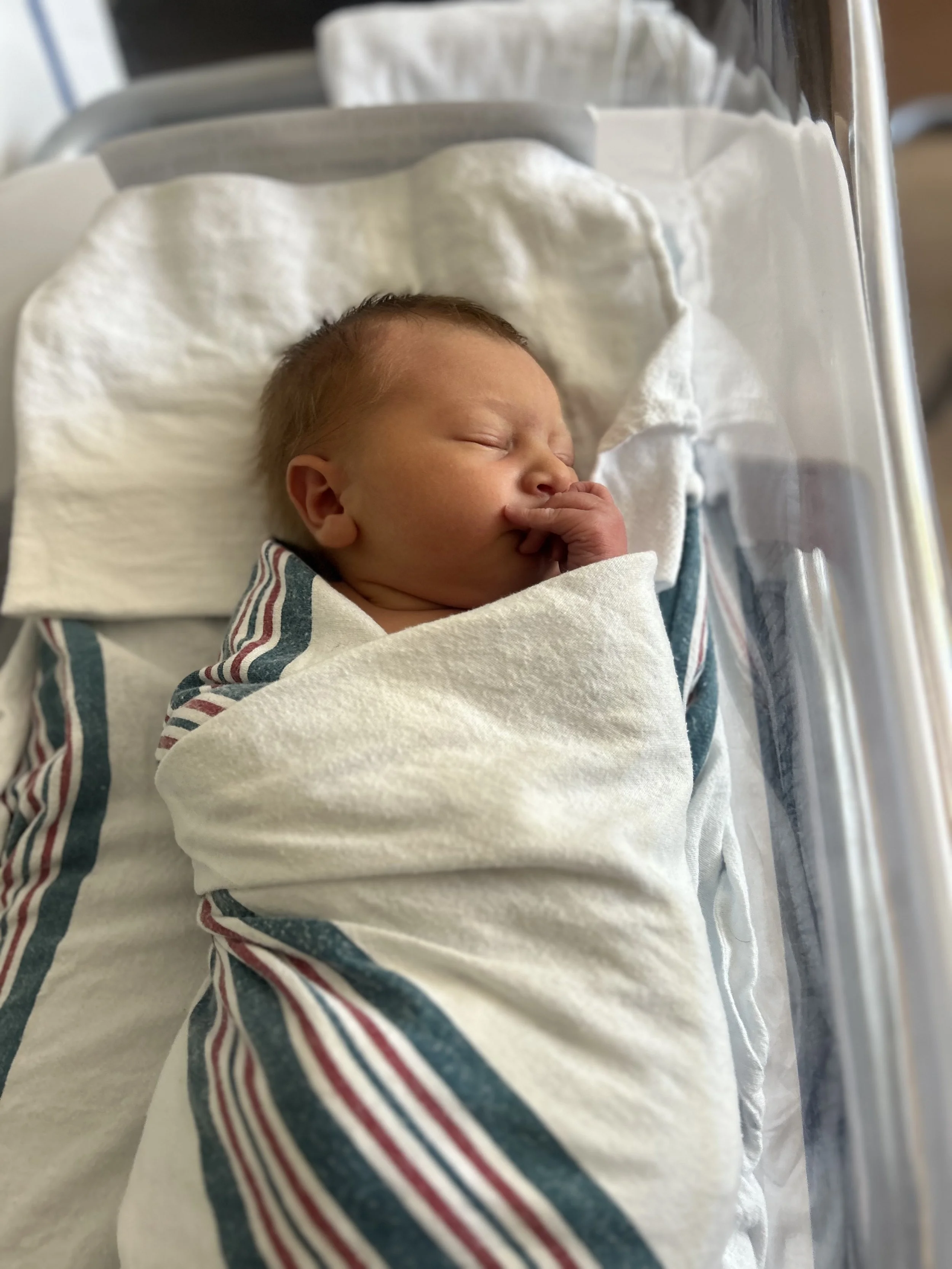
And waiting for me was news that made every missed strike, every frozen earlobe, every mosquito bite worth it: I had become a grandpa. My first grandchild, Easton Powers, had arrived. And as I held that little miracle in my arms, I realized something profound.
I didn't catch the biggest fish of the week. I caught the biggest trophy of my life.
The History Beneath the Surface:
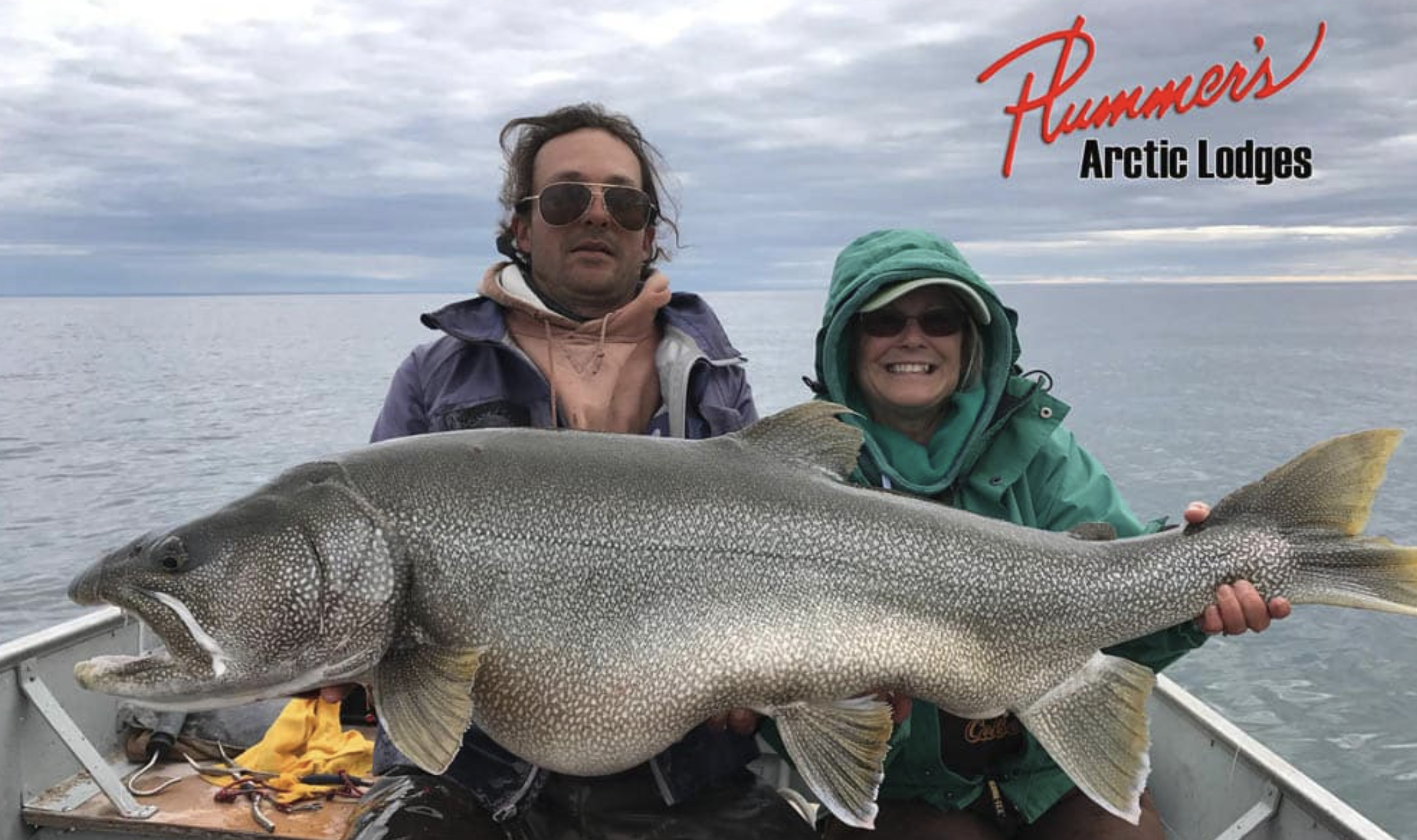
Great Bear Lake isn't just big. It's ancient. Carved by glaciers during the last ice age, its waters are among the most pristine on Earth. In 2016, UNESCO designated the lake and its watershed as the Tsá Tué Biosphere Reserve, recognizing its irreplaceable ecological value.
The lake trout that call these depths home are equally ancient. The IGFA all-tackle world record — a 72-pound goliath — was caught here in 1995 by Lloyd Bull. That fish hangs in the main lodge above the bar, and when you stand next to it, you realize the mass and scale of these creatures. Lake trout grow roughly one pound every two years. Do the math: a 50-pounder could be 100 years old. Some of the old-timers up there talk about netting fish pushing 100 pounds and believe those leviathans could be 200 years old.
Think about that. The fish you're casting to might have been alive when the Wright Brothers took flight. It might have survived world wars, ice ages, and every fad lure ever invented. That kind of perspective changes how you fish. It changes how you live.
The Plummer's Legacy: First Family of the Arctic:
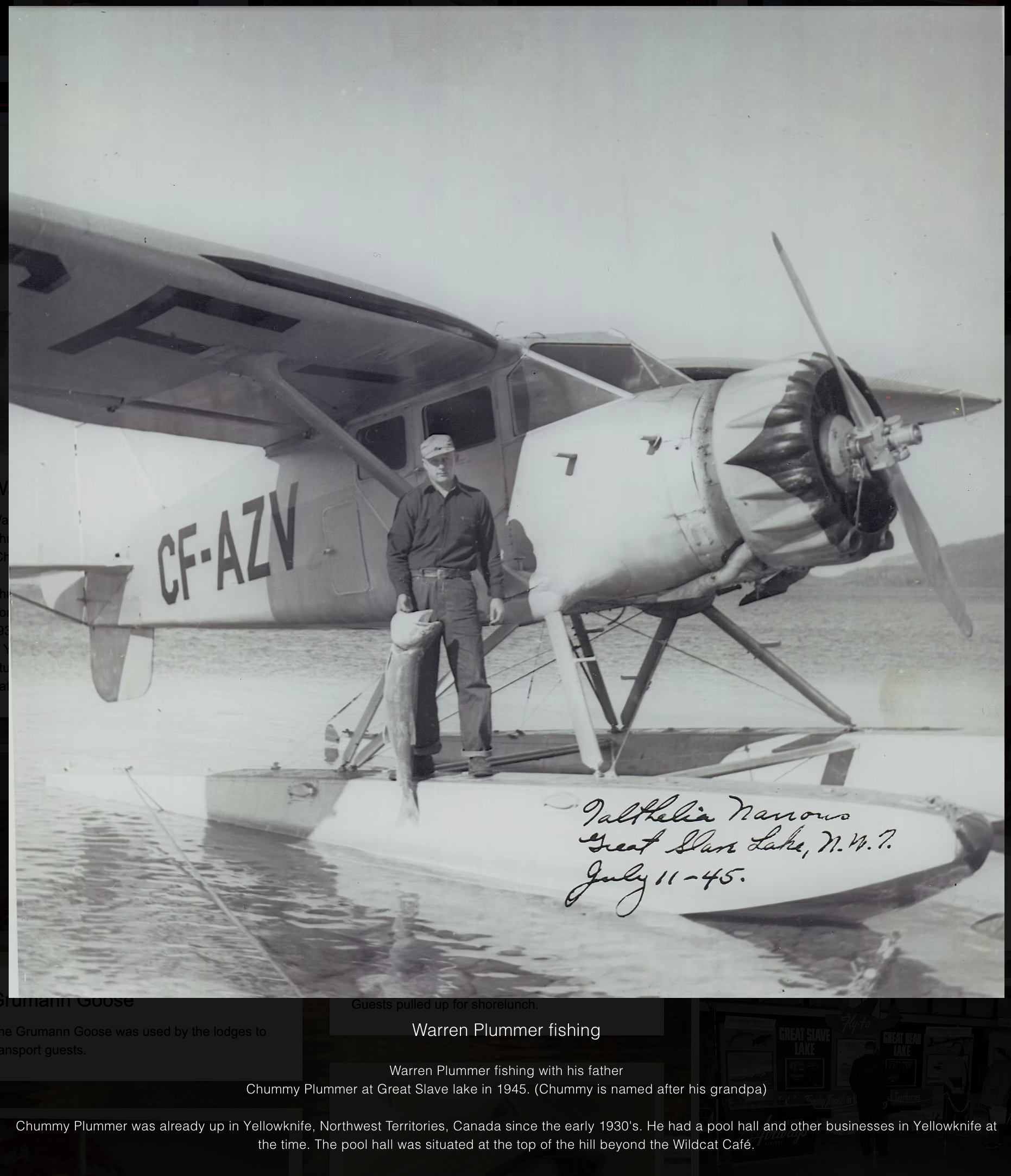
None of this would be possible without the Plummer family. Warren Plummer and his father discovered the Great Slave Lake location by canoe in 1938, but being pioneers in Arctic aviation, they quickly expanded their horizons. In 1959, Plummer's built the first sportfishing lodge on Great Bear Lake — making them the original, the pioneers, the ones who figured out how to get civilization to the edge of the wilderness and back again.
Today, Plummer's operates four lodges: Great Bear Lake Lodge, Great Slave Lake Lodge, Trophy Lodge on the Smith Arm, and the Arctic Circle Outpost. They fly guests in on Summit Air from Yellowknife, run daily fly-outs to legendary spots like the Tree River, and maintain a level of professionalism that comes from over 65 years of doing this better than anyone else.
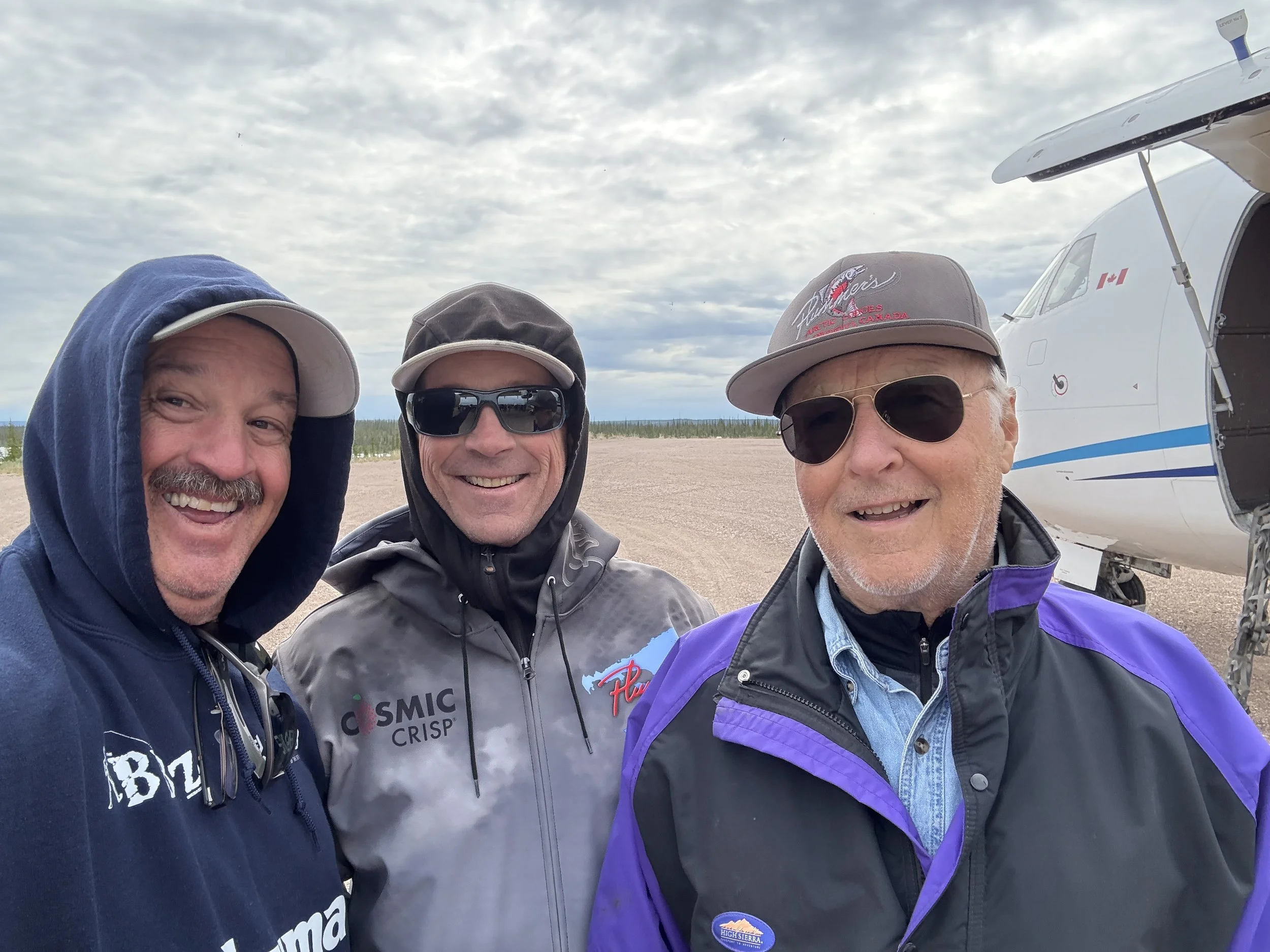
Chummy Plummer, still active in the operation, is a living legend. He built airstrips capable of handling 737 jets in the middle of the Arctic. He got his pilot's license before his driver's license. And he still thanks every guest personally as they board the plane home.
That's not just a business. That's a legacy.
Passing the Torch: The Next Generation:
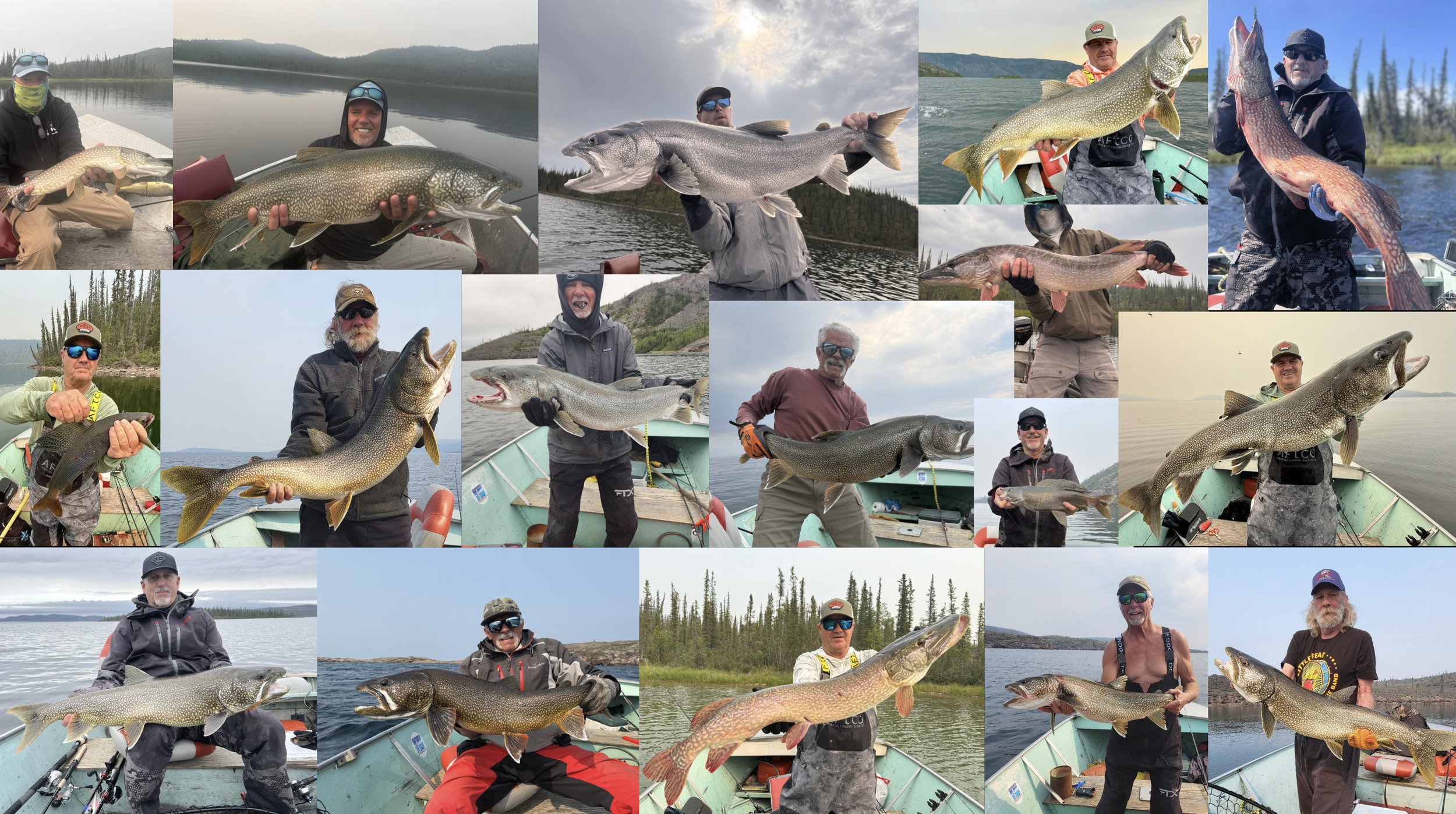
Here's what I want you to take away from this story, and it's bigger than any fish we caught.
Last year, we were strangers. This year, we're family. Harold and Kenny took us in. Tina and Darrell made us feel like we'd been coming for decades. And now, we've got a new crew — Rob, Sean, Scotty, Jimmy, Rick — who are already talking about who they're bringing next year.
That's how this works. That's how legacies survive.
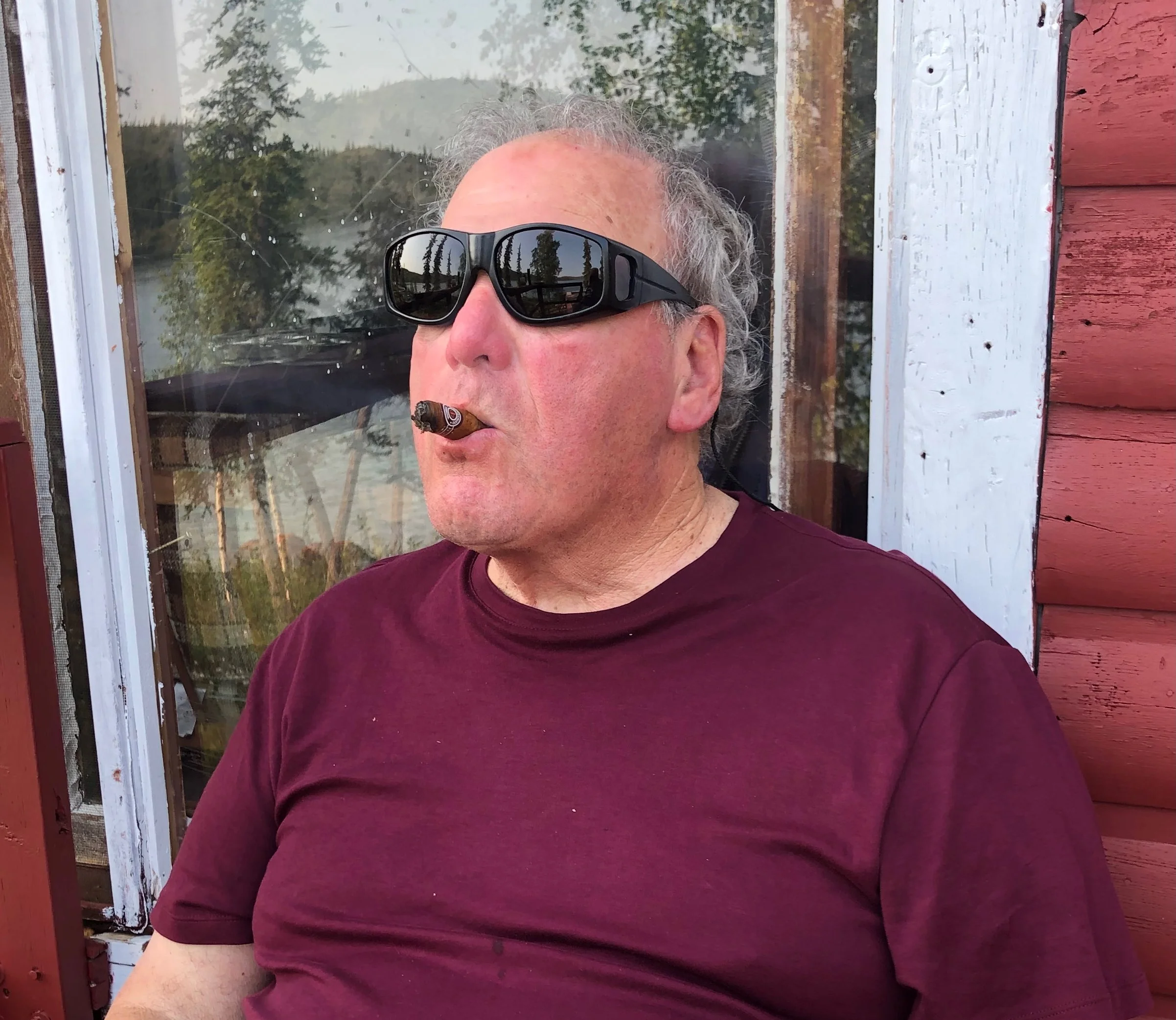
Rob might bring his son. Sean might bring a new buddy. Scotty might bring his daughter. And suddenly, a trip that started with a handful of guys becomes a tradition that spans generations. That's what Chummy and his father built. That's what Plummer's Arctic Lodges represents. And that's why we have to pass it on.
You can't keep a place like this alive by keeping it to yourself. You have to inspire someone to go. You have to show them it's worth it. And when they feel that passion — when they see that fire light up in their eyes, just like it did in Rob's — they'll tell their friends. They'll tell their family. And the cycle continues.
The Withdrawals:
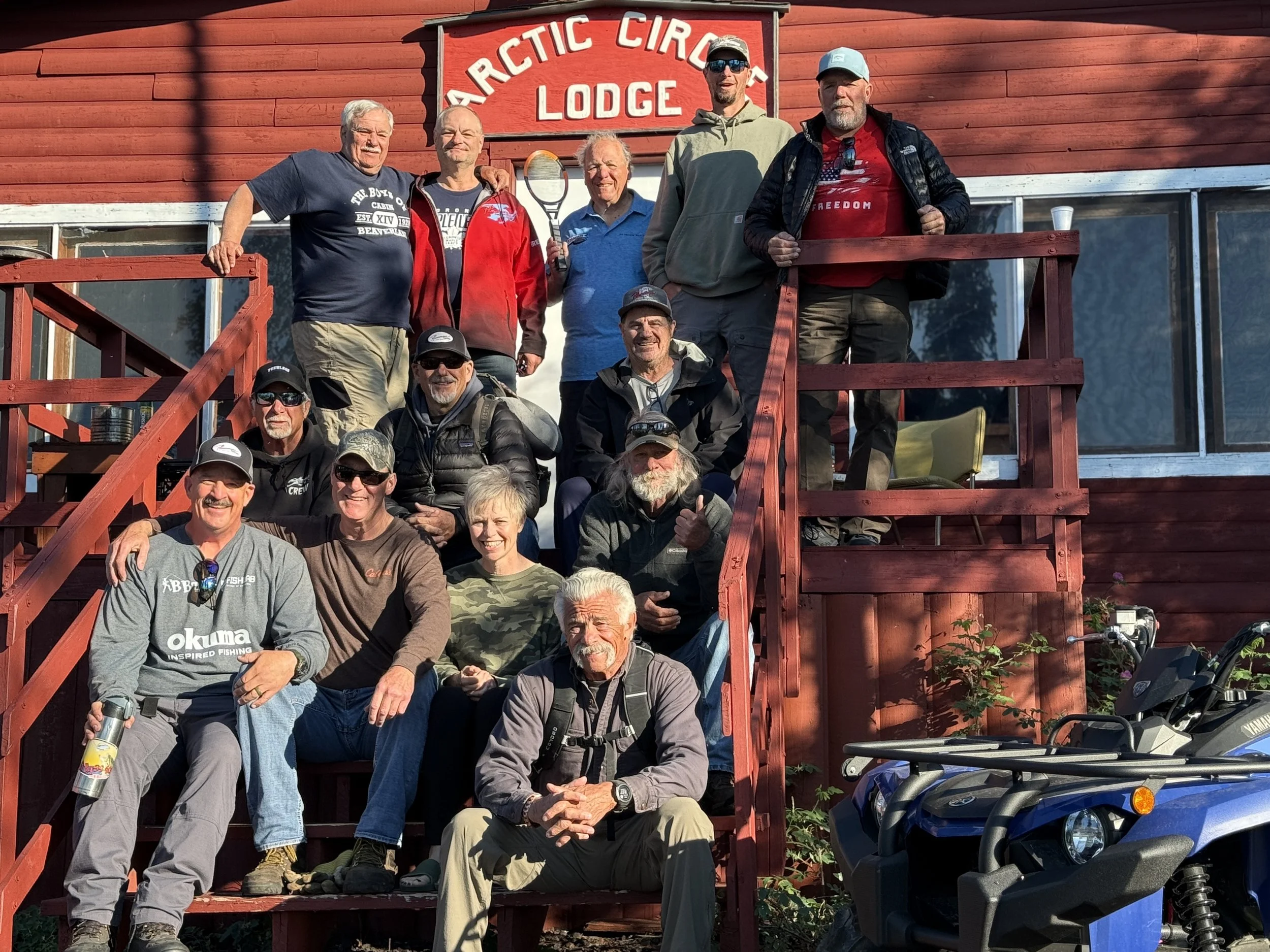
Team 2026: Harold Ball, Chris Ireland, Ken Gold, Sean Williams, Scott Randall, Tim Tuttle, Jim Milbrand, Rob Tomlin, Bill Siemantel, Darrell Hughson, Tina Hughson, Rick Hutchinson, Terry Tuttle
We flew home. Back to LAX. Back to traffic and timelines and the endless hum of the modern world. And now, as I sit here writing this, I'm dealing with the standard Plummer's Withdrawals: night sweats, arm spasms from phantom hooksets, reaching for a net that isn't there.
But I'm also smiling. Because I know something most people don't.
I know what the midnight sun looks like when it kisses the horizon at 2 AM and decides not to set. I know what it feels like to hold a fish that might be older than my grandfather. I know what it's like to share a week with brothers — blood and chosen — in a place where the only thing that matters is the next cast, the next story, the next laugh.
And I know I'll be back.
2027. The Arctic Circle is calling.
Plan Your Own Pilgrimage:
If this story has you itching to pack your bags, here's where to start:
Plummer's Arctic Lodges: www.plummerslodges.com
Plummer's Lodge History: www.plummerslodgeshistory.com
Great Bear Lake Outdoors: www.greatbearlakeoutdoors.com
BBZ TV on YouTube: Search for past Arctic Circle episodes and trip recaps
Mercury Marine: www.mercurymarine.com